The route
Being a Japanese motorcyclist, I should own a Super Cub at least once. I bought a brand new C125. I have never ridden the western half of Japan, and luckily, I have a friend in Kyushu, the main island in the south. Kyushu has the Aso area, which is renowned for being a heavenly place for motorcycling. I have never been to Kyushu. My destination is decided.
I planned to avoid large cities. There are too many vehicles, and it's never fun for me to ride. Additionally, I would not ride any motorway on my C125. In Japan, motorbikes under 125cc are not allowed to use motorways.
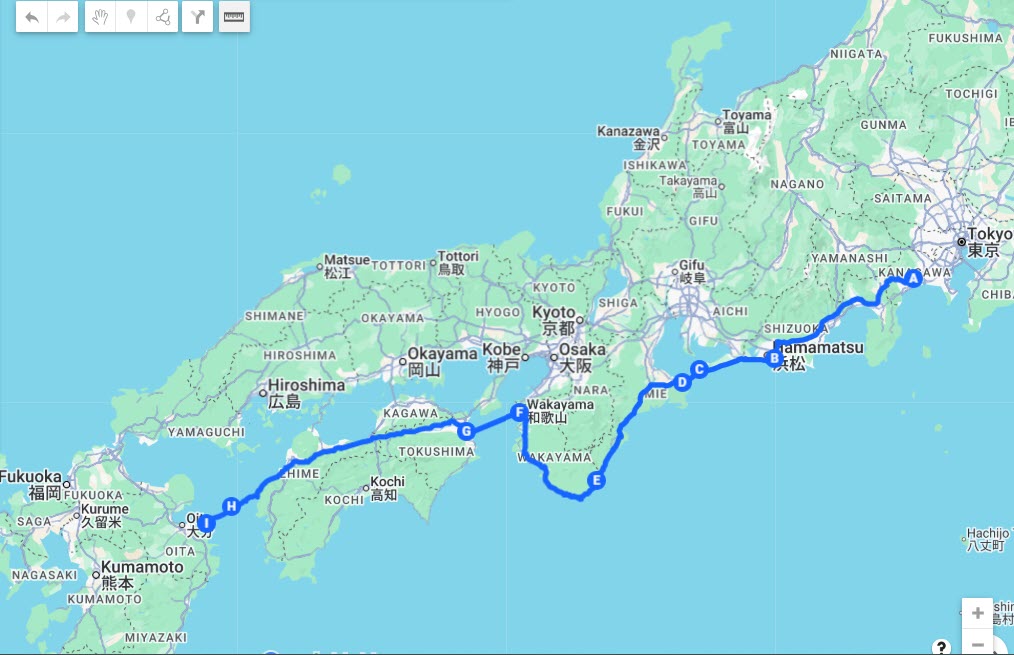
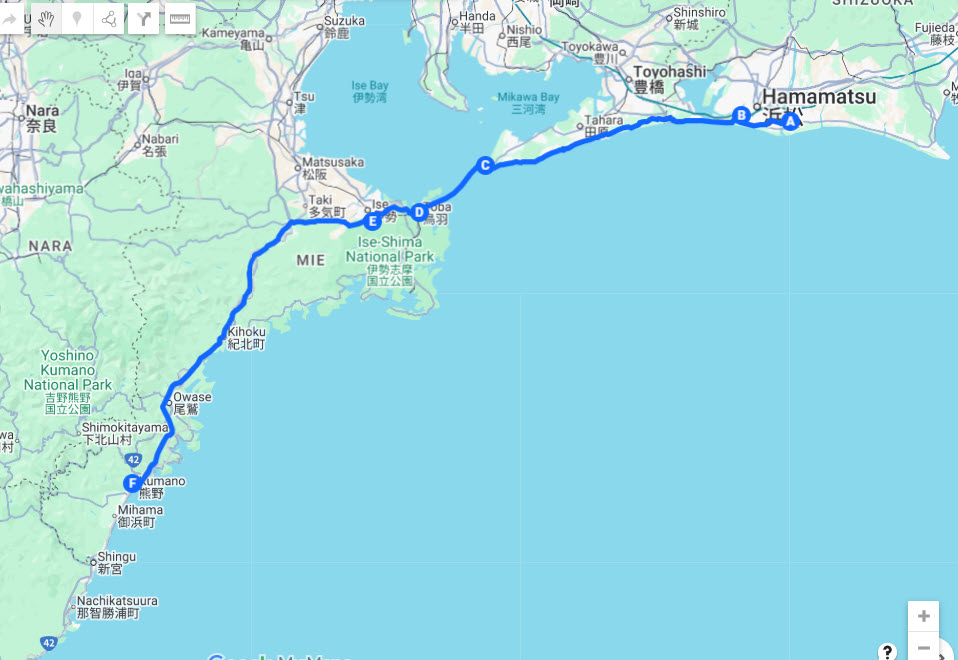
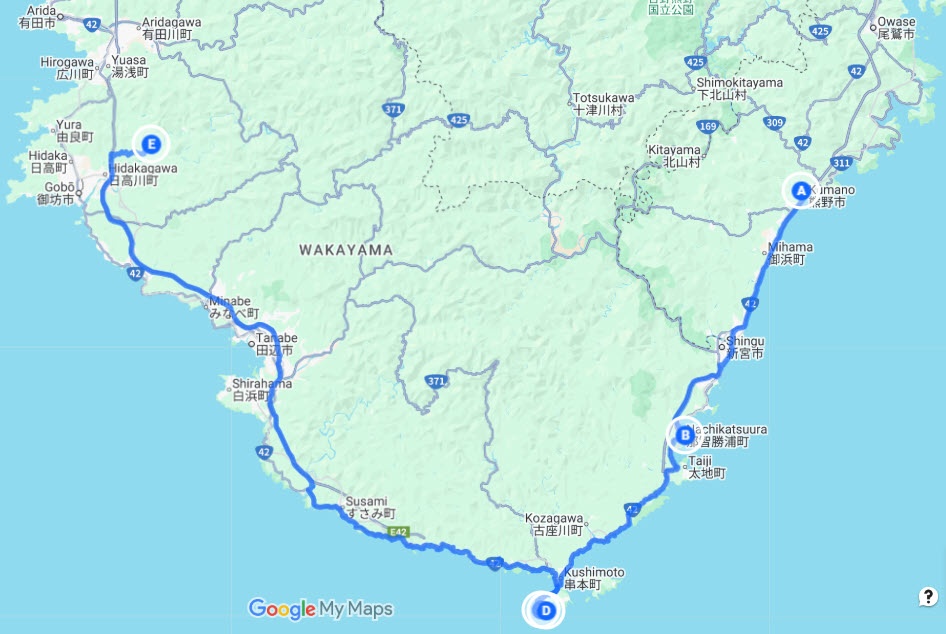
To avoid the large cities, Nagoya and Osaka, I did a small research. The solution was a ferry. By using two ferries, I could skip Nagoya and Osaka. I was chuffed with my findings. Here is my route:
Preparing C125 for the trip
I made three modifications: mirrors, a screen, and a rear carrier.
a) Mirrors
With the standard setting, it is challenging to see behind. It is hazardous because C125 is on the slower side of traffic, and cars frequently overtake it. Luckily, there are parts to offset mirrors for a better rear view.
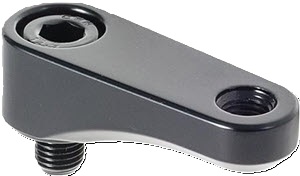
There are two versions, depending on how much offset you want - 30mm or 45mm. The hex holes catch rain and get rusty. To prevent such occurrences, there are caps like these.
Looking behind turned out to be crucial. In the countryside, cars go a lot faster than the speed limit. Depending on the region, they could go 10 to 30 km/h ( 6 to 18 mph) faster. By observing cars, I could see if they are keen to overtake me or happy to go along with my speed. I often gave way by stopping at roadside safe spaces. Willingly giving away is the best strategy for slow motorbikes. I could maintain my pace until the next fast car comes, and the cars appreciated my kindness. Being pushed around by an irritated car is not comfortable.
b) Screen
For long journeys and rain, a screen is a necessary modification for me. There are many screens to choose from, and I decided to select one for Cross Cub. I had heard that it would fit, but my version did not fit perfectly. Luckily, one of the two holes was in the same position as the mirror hole, so that I could fit it.
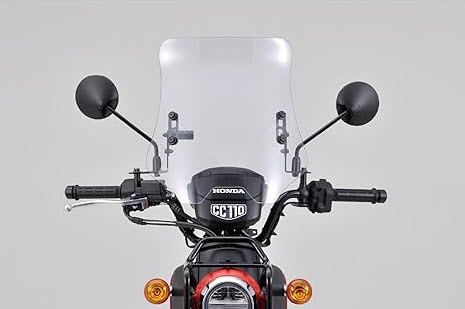
Unfortunately, the screen height was not high enough. In the countryside, the wind hit my face. An extension screen would have made a significant improvement, but it was too late. A screen for an earlier model Cross Cub might have fit perfectly, but I am speculating here. It’s a shame, as I liked the shape of the screen.
c) Rear carrier
I always use a top box. A Givi Monokey box with a weight limit is larger. Also, I need a space to put a rollover bag. I decided not to camp for this trip, so a 40-litre rollover bag would do.
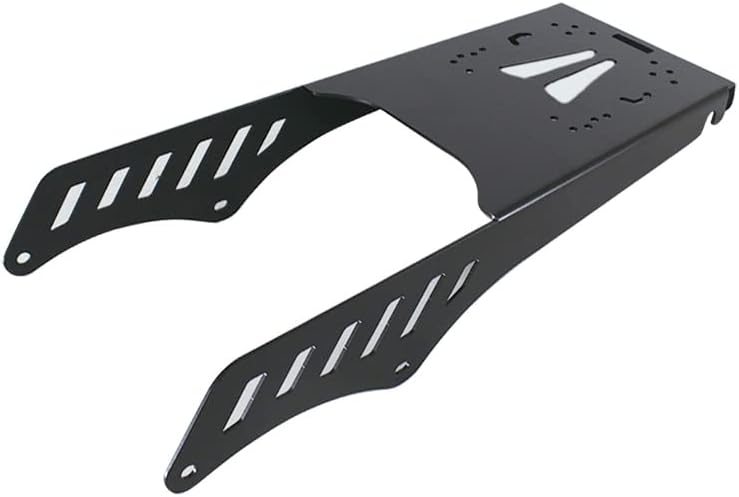
I have found this carrier that can carry 15kg. It is solid, and I can keep the original rear carrier. A Givi universal base nicely fits the carrier holes. I was very pleased with my career choice, and the setup worked very well.

Day 1: Kanagawa to Hamamatsu
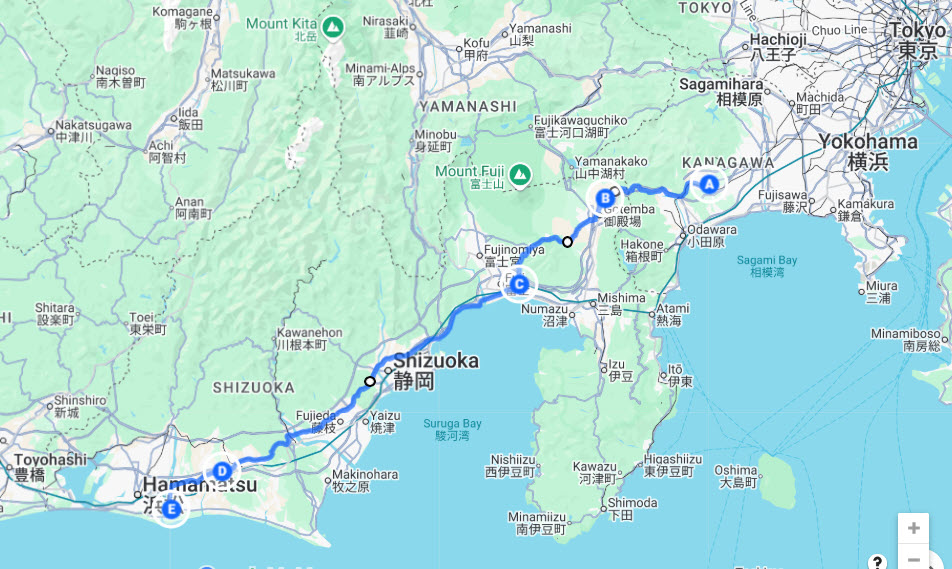
Day 1's destination was Hamamatsu. It is not widely known, but Hamamatsu is the Mecca of Japanese motorcycles. Mr Honda was born here and he started up Honda in Hamamatsu. Yamaha Motorcycle HQ is in Hamamatsu. Suzuki motorcycle HQ is in Hamatsu as well. I planned to spend a day visiting around these places.
I had ridden my C125 for only 500km since I bought it. Its strange gear change was utterly new to me. My left hand was doing nothing. I kicked DOWN to move up to a higher gear, and there were only four speeds. After three kick downs, I was in the top gear! To get the first gear, there were two options. If the bike stops at a traffic light, you can get the first gear from fourth by kicking down. If the bike is still moving before a stop, you have to kick DOWN with your heel as many times as required. The gear lever shape was like a seesaw. With your toeside, you kick down for a higher gear, and with your heel side, you kick down for a lower gear. My left foot was working hard. During this trip, I found my knee was uncomfortable and that was because of this kicking all day long. I made several mistakes by confusing with the normal motorbike gear change, and my bike screamed with high revs, throwing my body forward. I gradually improved, going up through gears and accelerating more smoothly. However, shifting down still had plenty of room for improvement.
My phone navigation told me there was a faster route, which I accepted. Instead of going through a flat and easier area in a slightly southern area, it took me to a route closer to Mt. Fuji. I climbed higher in a mountainous area, and it started raining with fog. Temperature dtopped. There was no fun, but unless I went through the area, there was no chance to improve my riding environment. I soldiered on, and I started losing altitute. In the end, I found myself riding comfortably in a flat area with no rain.
One thing that riders from abroad never touch is 'Riders' House'. The Japanese language is not keen on differentiating between singular and plural, so they simply call them 'Rider House (ライダーハウス)'. They are very basic accommodations for motorcyclists, usually run by a motorcyclist. The fee for a stay is low, ranging from 1,000 to 3,000 yen per night, but you stay in a dormitory and use your sleeping bag. Some do not have shower facilities. You will need to arrange your food. For a long trip, Rider Houses can help you save costs and let you meet other riders to share information and stories. There are days when you don't want to camp; then, a Rider House is the next option.
There are two problems with Rider Houses for me. One is smoking. The ratio of smokers is higher amongst motorcyclists. At some Riders' Houses, riders smoke in the house. As far as smoking is concerned, Japan is about a decade behind the UK. Unfortunately, I am allergic to smoking. The other is a lack of sleep. People enjoy talking, and so do I. Lack of sleep affects my riding. To breathe clearer air and get plenty of sleep, I opted for budget-friendly accommodations, as I don't have a tent in Japan.
Today, I am staying at a Rider House, called Rider House Ken. The owner is a retired lady who used to ride a cruiser and travelled all around Japan. When she was around seventy, she stopped riding because it had become too dangerous. My advanced training tutor, Tom, said that riding was very physical. I totally agree with him. Because it is physical, your body may struggle to cope with riding in the future. I would have to give up riding someday in the end. Before it comes, I want to travel on a motorbike as much as possible so that I will have plenty of memories to reflect on when I am very old.
Soon after I checked in, another rider joined. He rode a GB350. GB350 had been popular in Japan for several years when Honda brought it from India. It was originally developed against Royal Enfield in India. Its name was different, Hiness and it had more gadgets such as a phone connection. Anyway, the simpler version, GB350, looked light, and its exhaust sound was nice. The owner of the CB350 used to be a firefighter, but quit his job and started travelling around Japan on it. Riding around Japan is called 'Nihon Isshuu' (One round Japan). We exchanged our riding stories, but I did not mention that I was from the UK. I knew such a claim would draw a line between him and me, and instantly kill the party.
The weather forcast said it would rain the following day. It is not fun to ride in rain, so I thought I was goind to stay at the Rider House. Mr GB350 thought the same.
Day 2: Hamamatsu
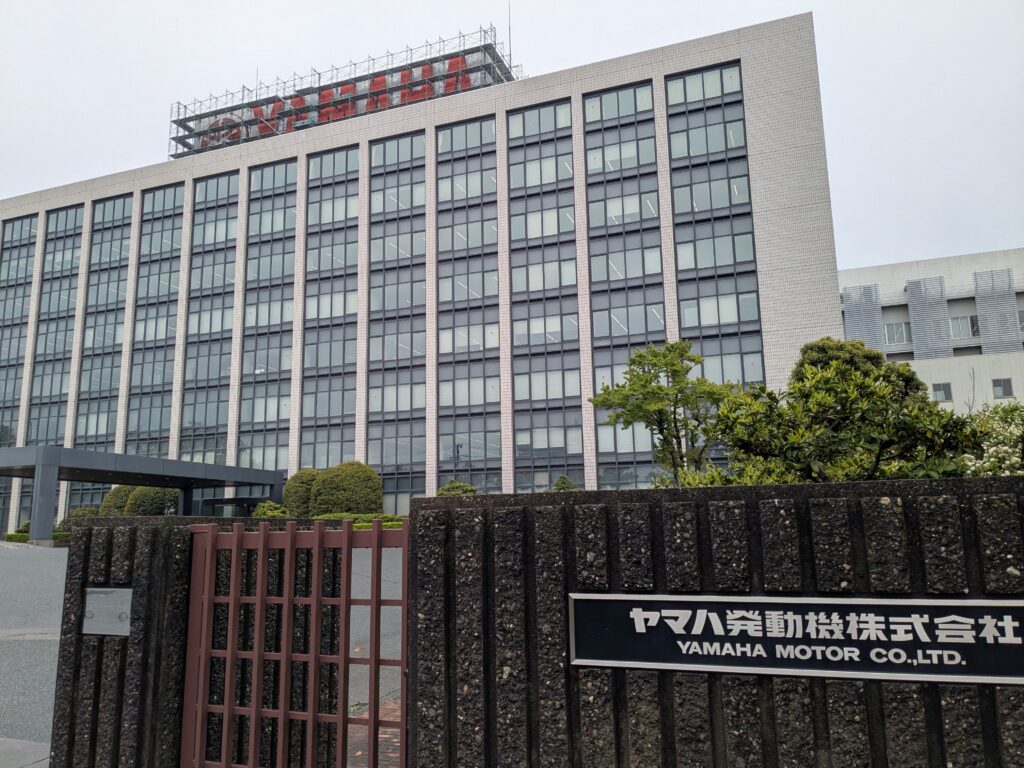
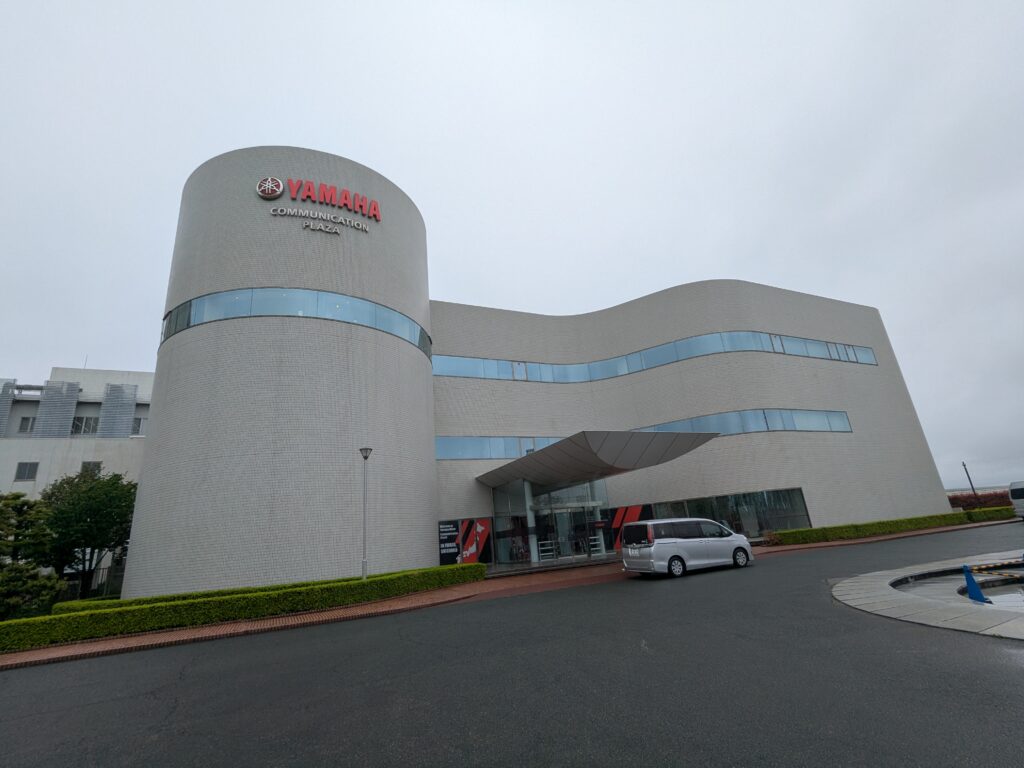
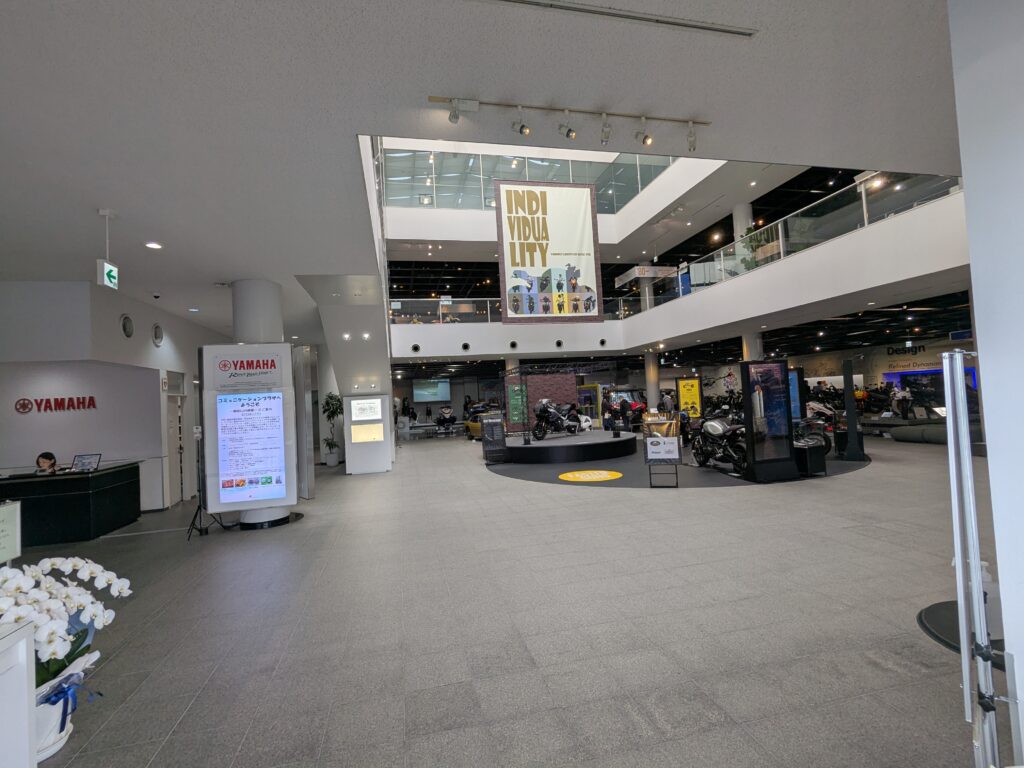
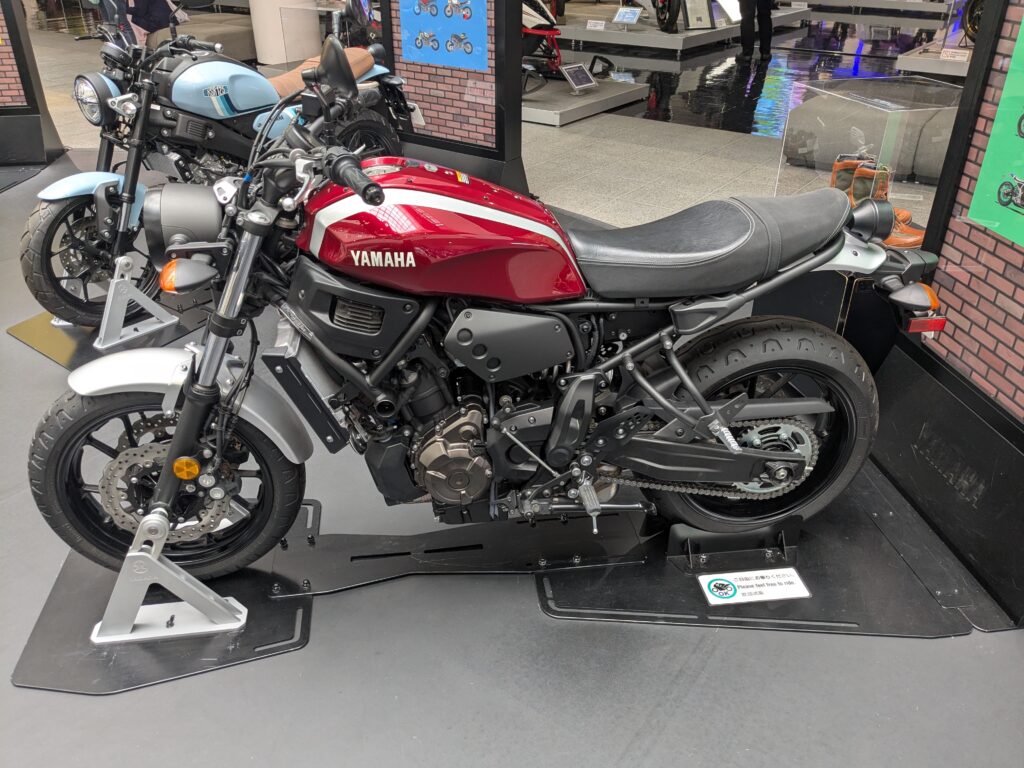
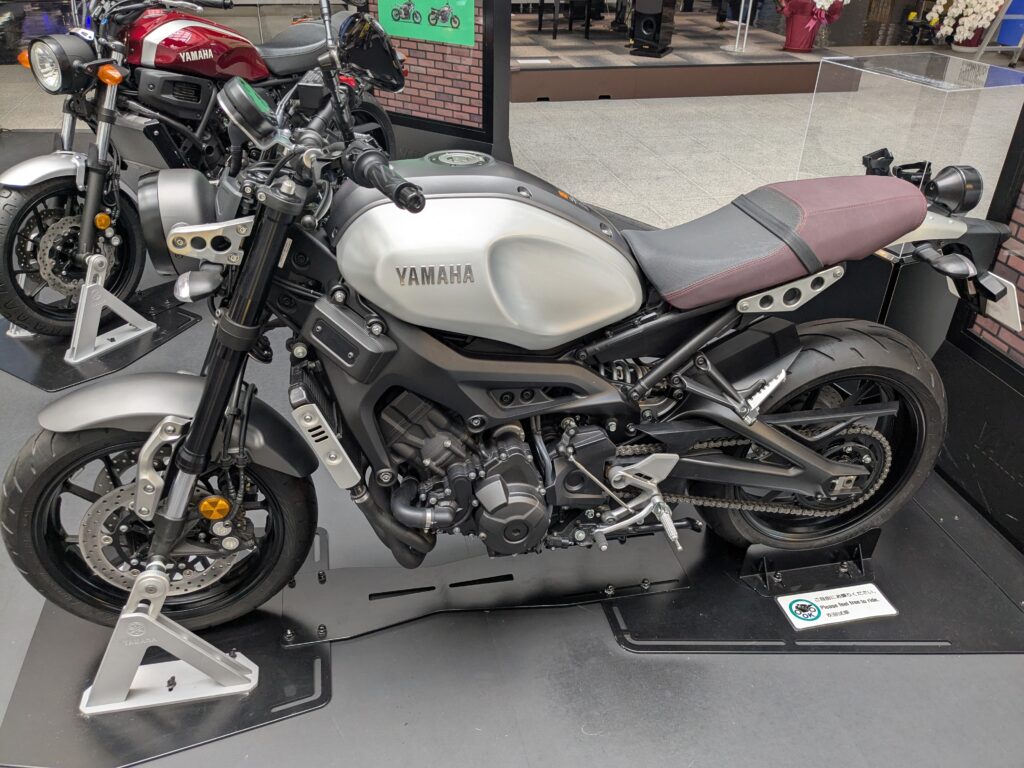
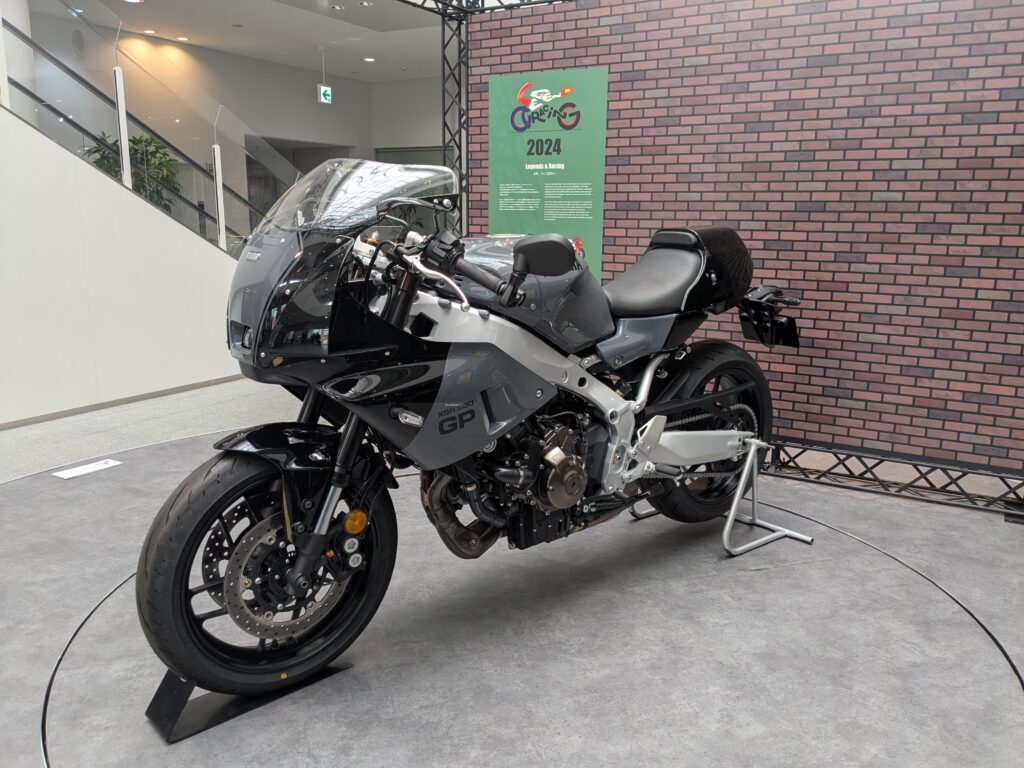
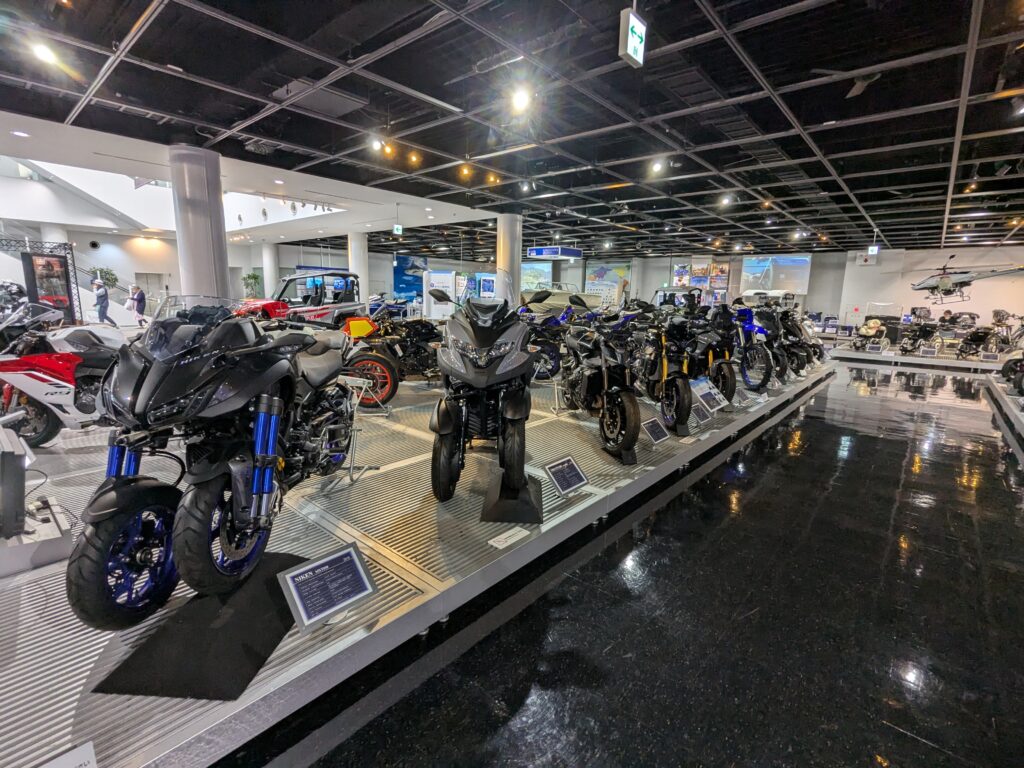
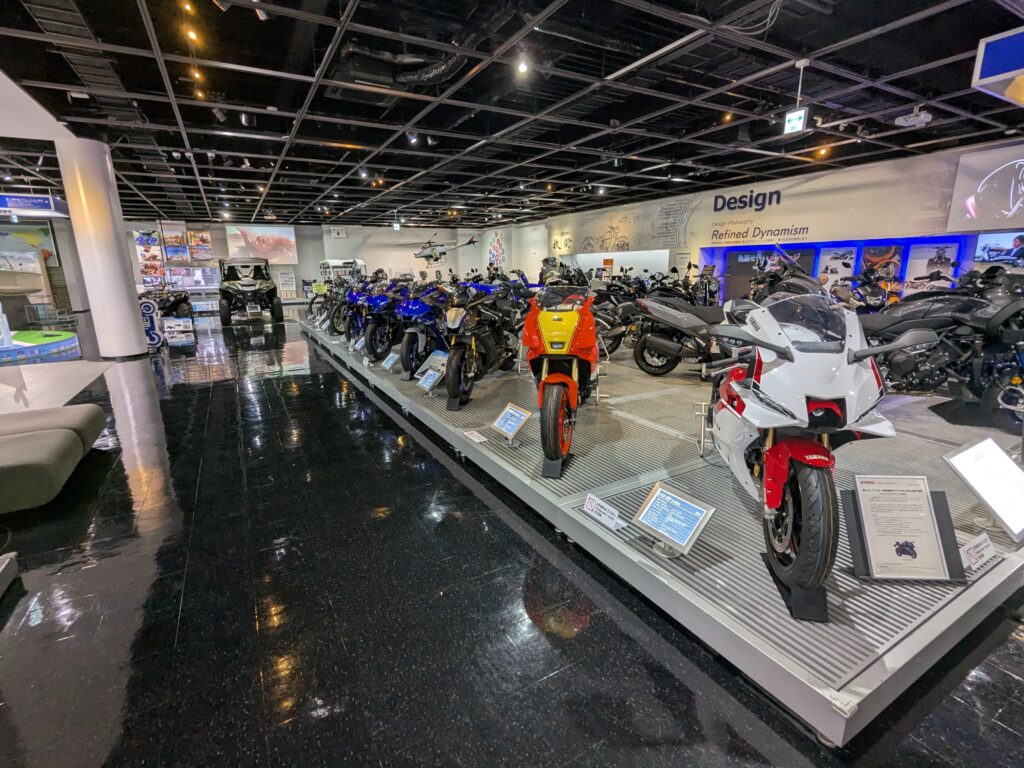
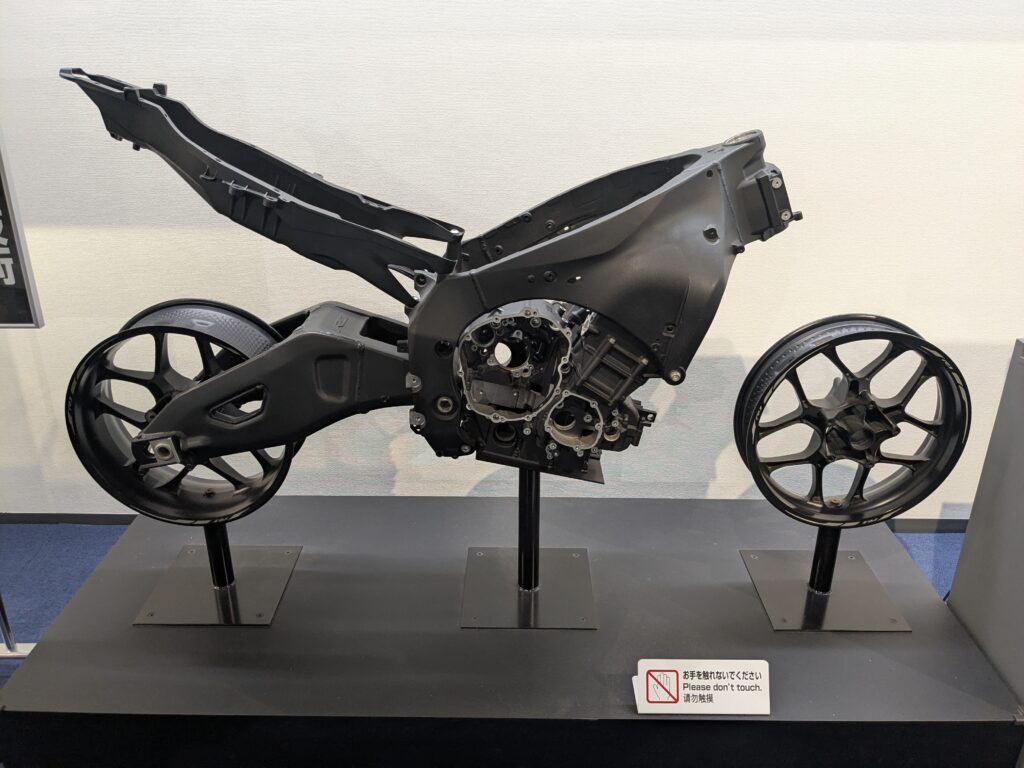
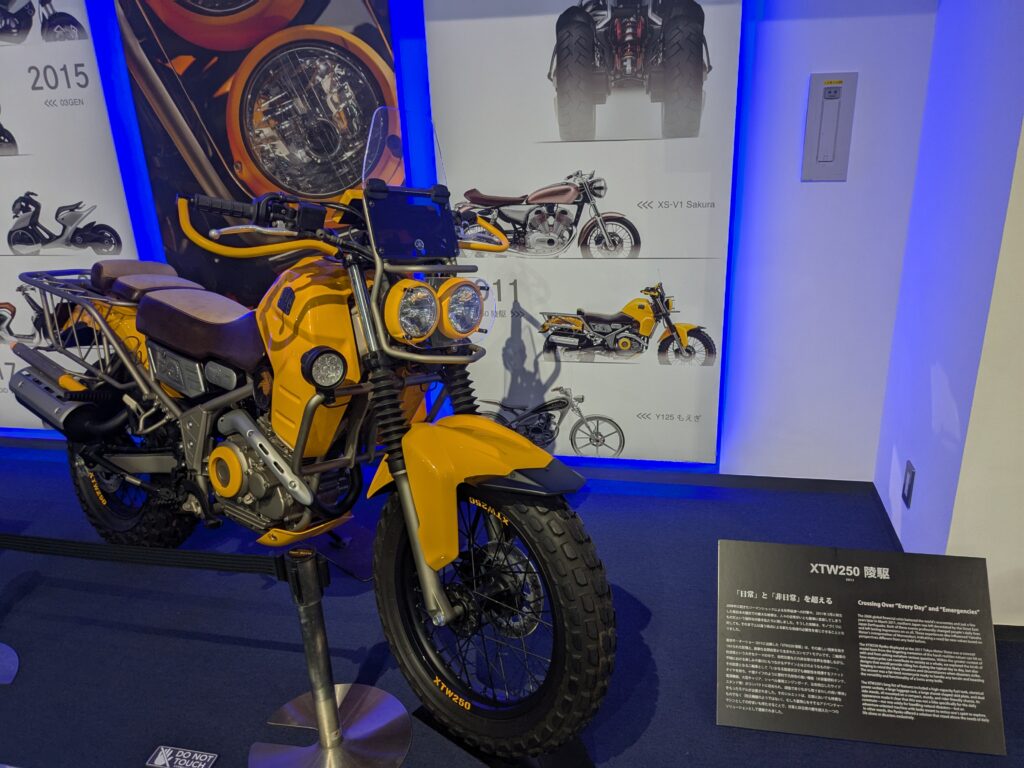
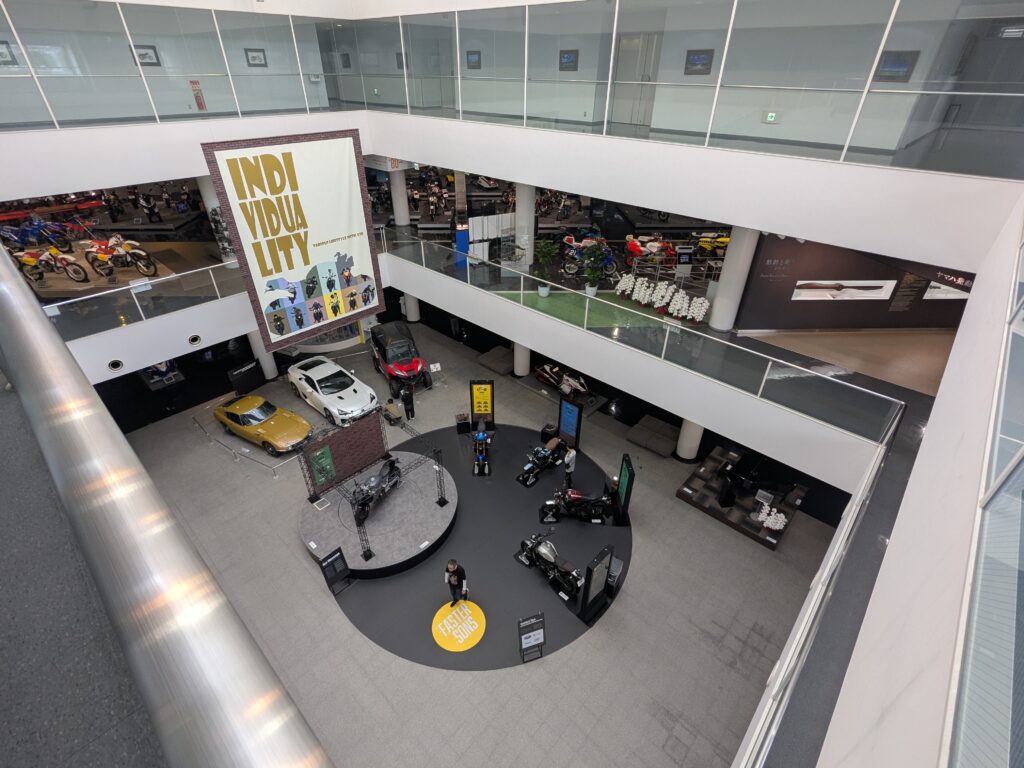
Fortunately, the rain stopped before lunch. I started riding to Yamaha Motorcycle HQ. They have a Communication Plaza. Although visiting their factory was not possible, I could at least visit the Plaza. Thoght it is in Japanese, you can watch their VR on this page.
My first motorbike was a Yamaha MR50, a scrumbler-ish 50cc motorbike with gears. I went to my high school regardless of rain or snow.
More recently, I owned a Tricity 155. I was in northern Japan where it snowed a lot, so I thought of putting snow tyres during the snow season. I made a mistake by putting chains instead of snow tyres because they were cheaper. Before the second winter, I moved around Tokyo, and I missed the opportunity to ride on snow tyres.
Now I own a Yamaha Tracer 700. On it, I went to Nordkapp, but I will write about it in another section.
I did not expect any opportunity to entre either a business building or a factory. I went to the Communication Plaza instead.
The ground floor was basically for motorcycles. I was allowed to sit on XSR700, XSR900, XSR900SP and other bikes on the same floor.
Also, there were displays about Yamaha's marine sports products.
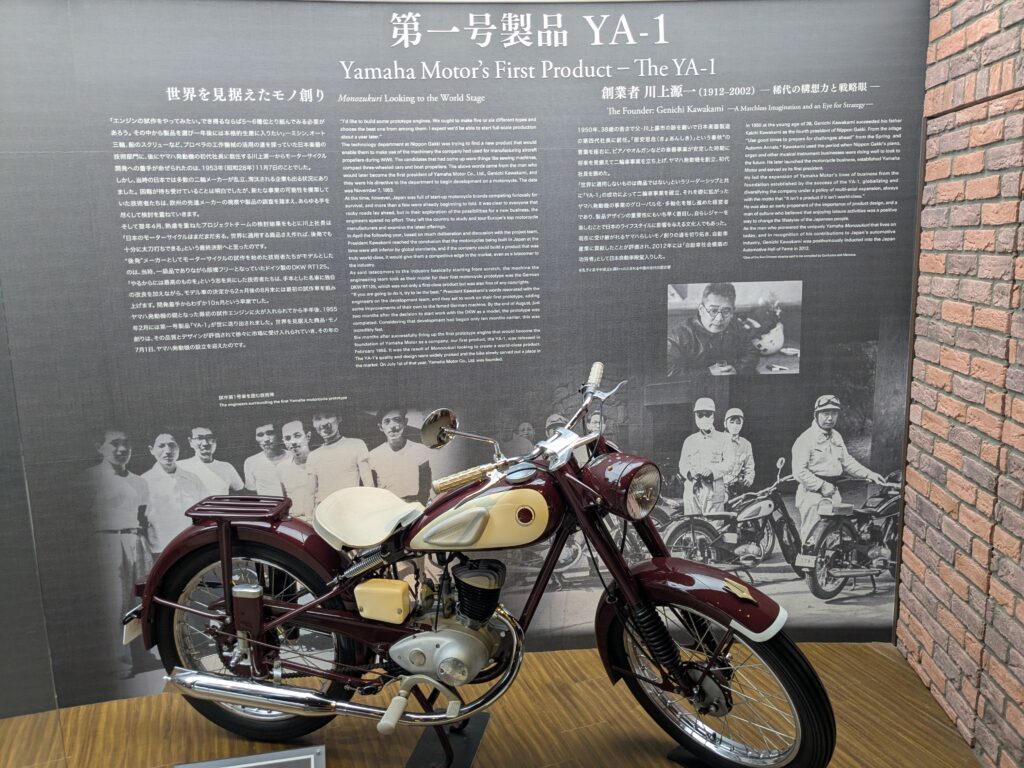
On the first floor, Yamaha motorcycles were displayed in chronological order according to their history. There was their very first motorcycle YA-1.
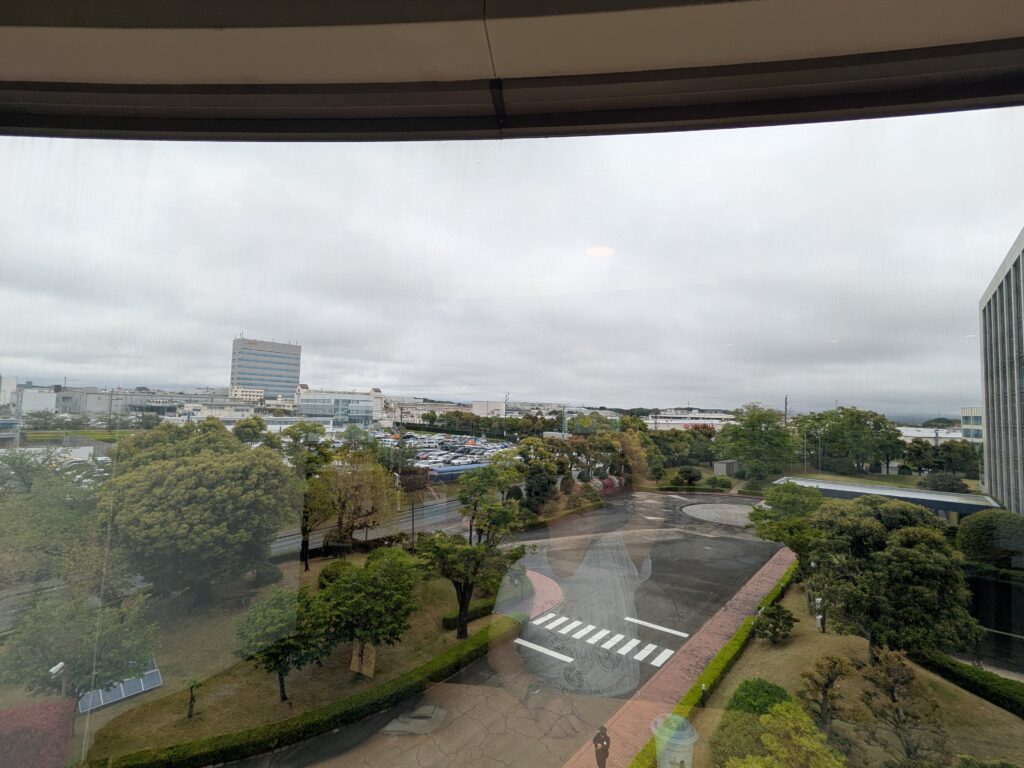
On the second floor, there was a large rest area where you could buy soft drinks and coffee from vending machines. I sat there and appreciated the view of the Yamaha buildings. I could see what looked like a factory and a Yamaha Stadium that was under construction.
The second floor also had meeting rooms for the company. Two guys sat on an island. They were talking about a motorcycle. I felt privileged to be in the middle of the Yamaha motorcycle world.
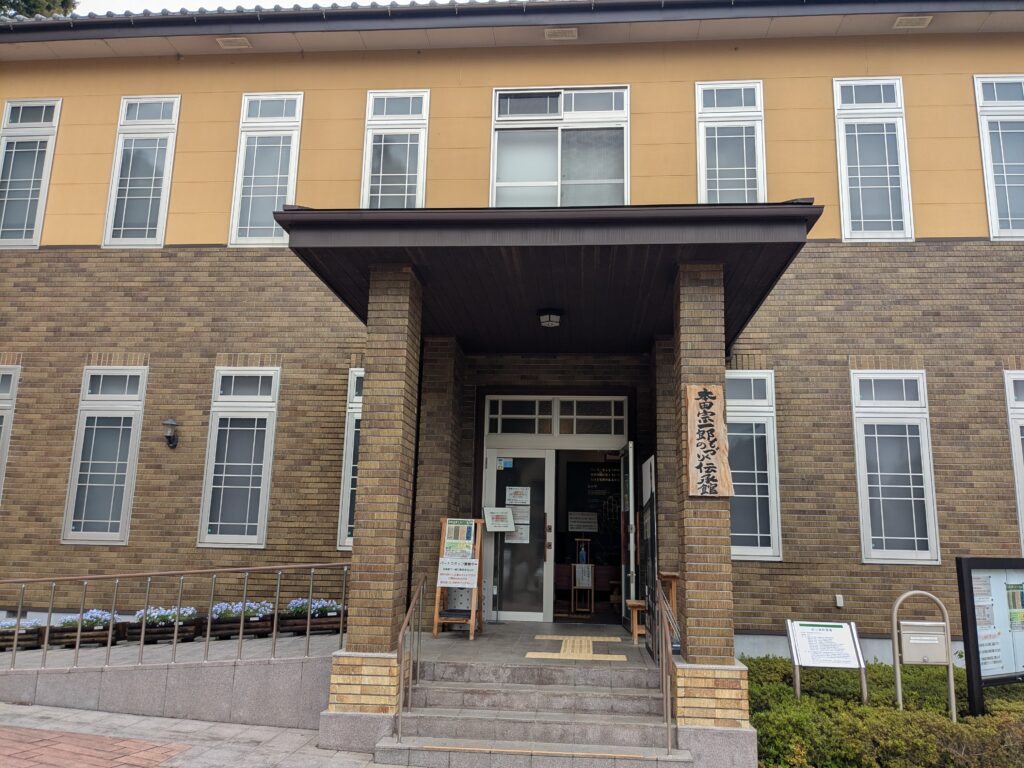
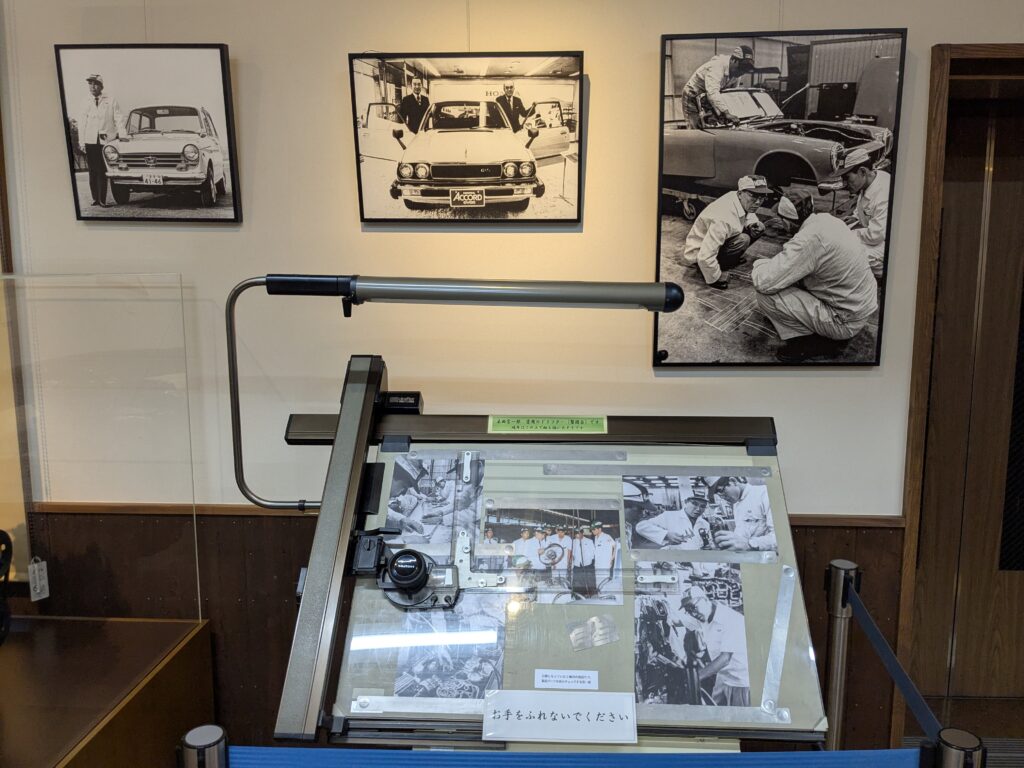
After visiting Yamaha Town, I went to the Soichiro Honda Craftsmanship Centre, which was about 30 minutes to the north.
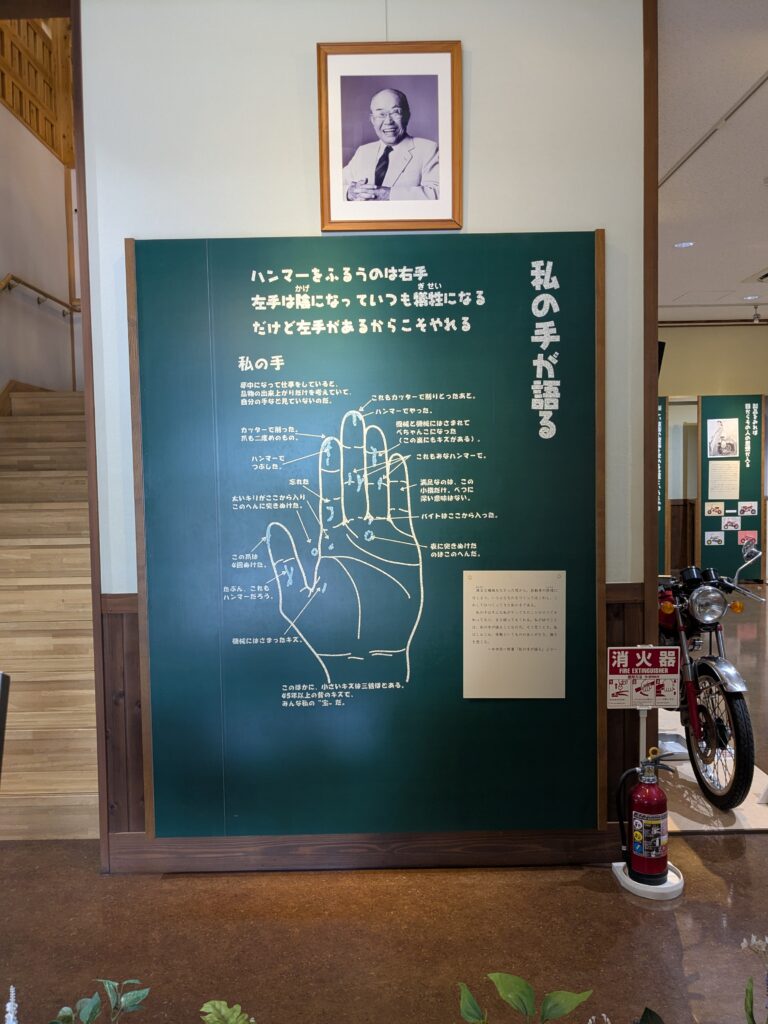
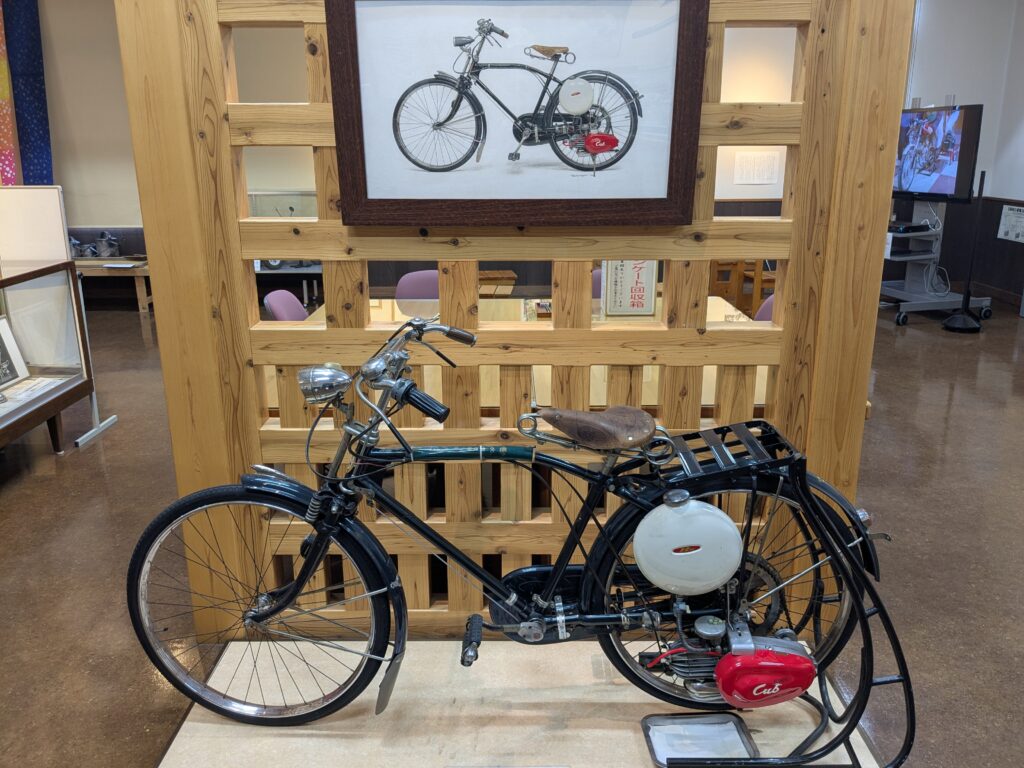
The area Tenryu is Mr Honda's birth town. The Craftsmanship Centre is to celebrate his achievements and to share his craftsmanship and philosophy. Naturally, the displays included his motorcycles from the early stages of Honda.
Those who worked for Mr Honda called him 'Oyaji-san', a respectful and affectionate way to address a person. Honda's company ethos has been distinctly different from that of other Japanese companies, and its uniqueness remains evident. All company workers (and family) passionately love Honda. When you attend a meeting, you are expected to bring your ideas. Just attending a meeting was frowned upon. Sony has sadly lost its uniqueness, but Honda is still unique. The iconic company to me.
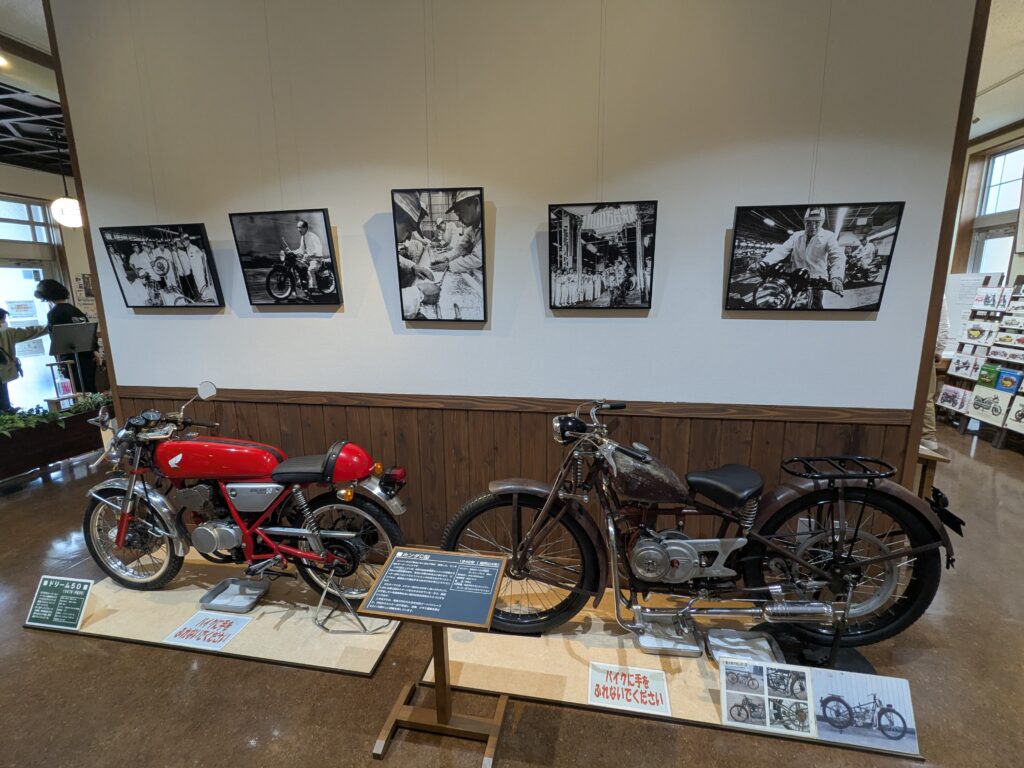
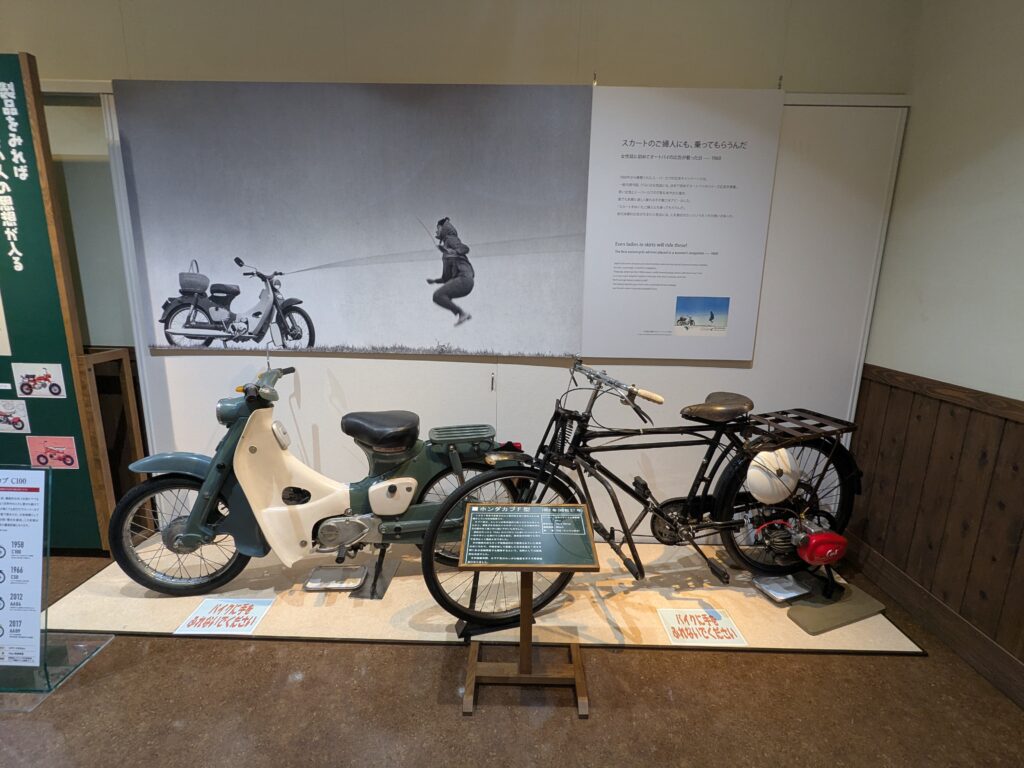
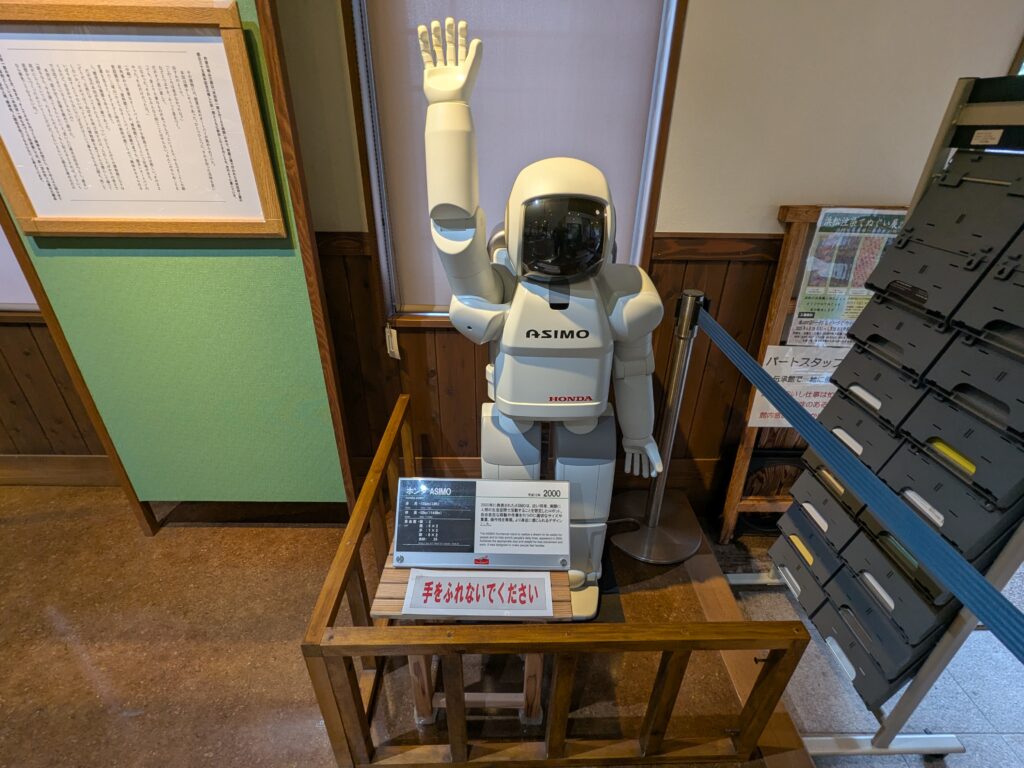
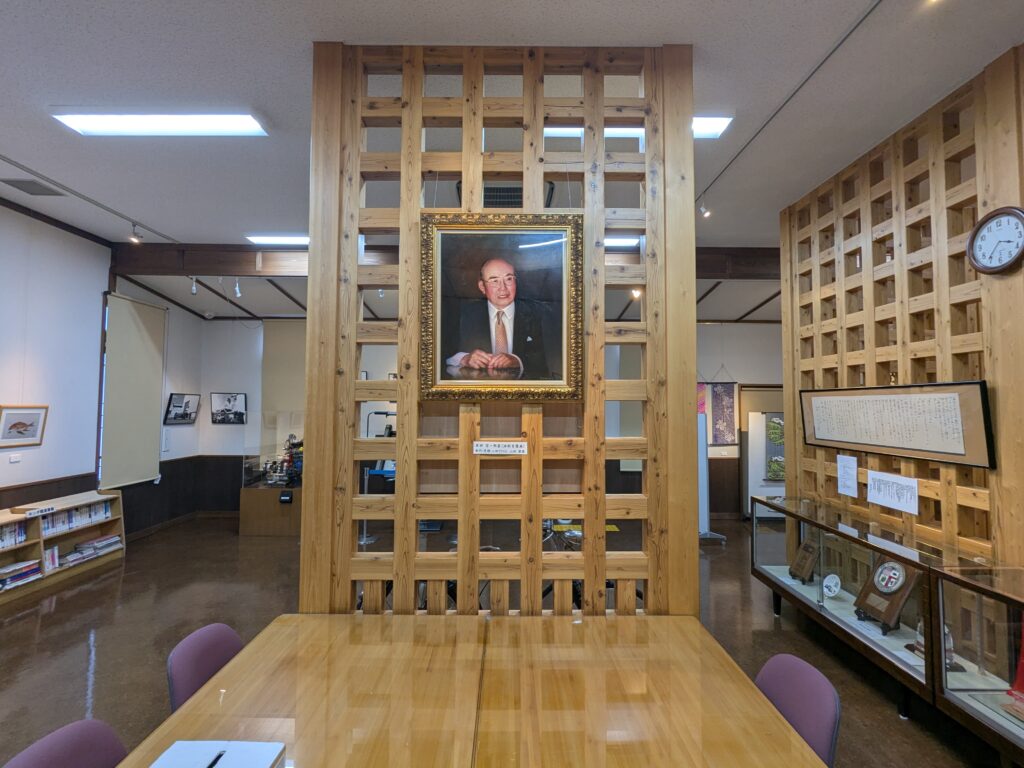
Back at Rider House Ken. Mr GB350 also came back, because the owner lady told us that she could provide us with an evening meal. From previous visitors' reviews, we knew that the food would be great.
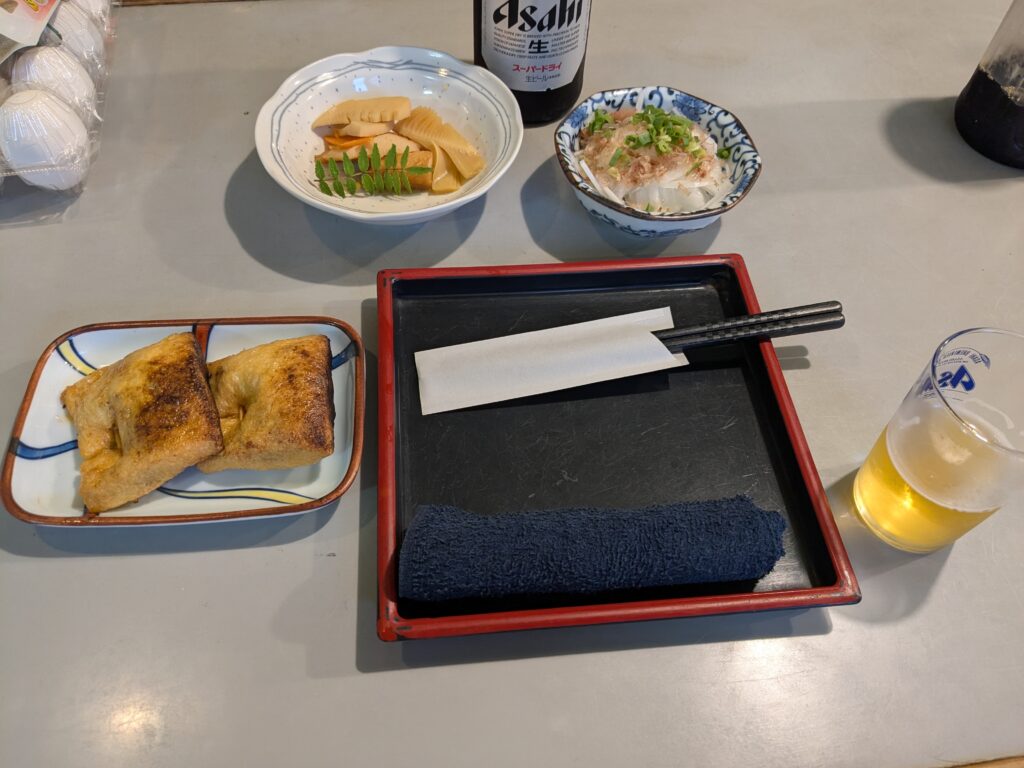
We were invited to her restaurant. There was a very long counter, and at the far end, there was a gentleman. He is the owner of a cafe and provides excellent food there, but once a week, he comes to her restaurant to enjoy her food. The lady owner said that the gentleman had taught her many dishes that she cooks.
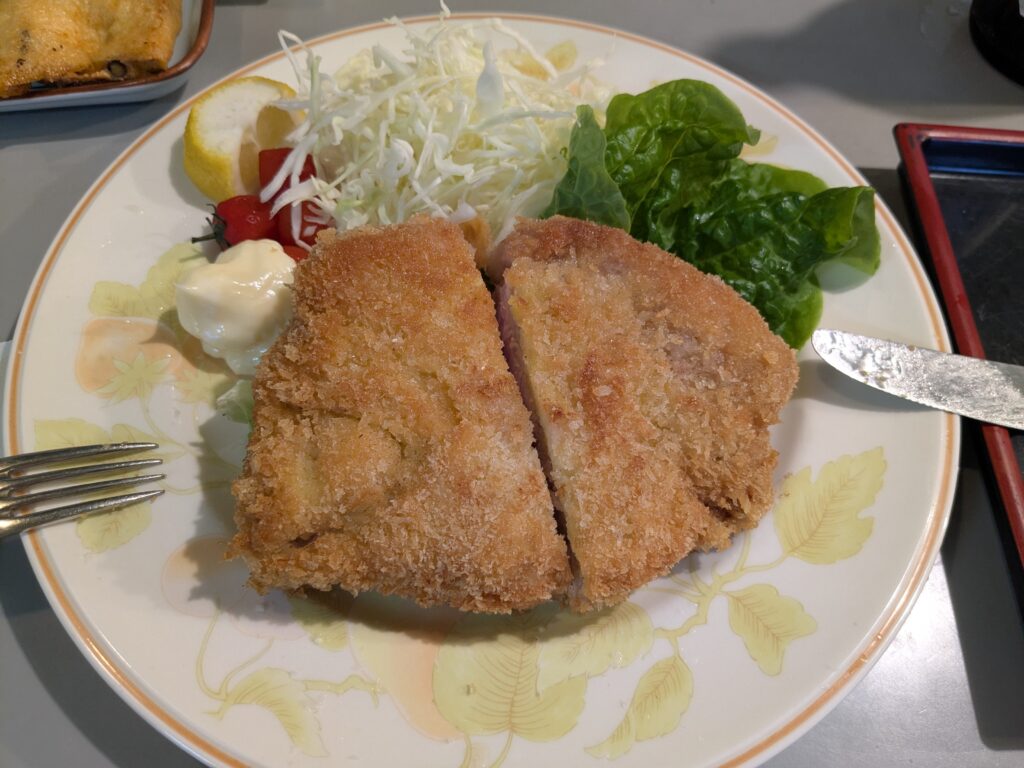
She told us that the main course would be a pork cutlet, but it takes time to cook because it is very thick and is slowly cooked. We started with other smaller dishes that she had already prepared. While deep-frying our cutlets, she shared stories about the places she rode and how she gave up riding at the age of 70. I told her about my three-wheeler scooter and Honda's development of a self-standing motorcycle.
Our big, thick, pork cutlets were ready. She told us to cut it in half. She had a look at the meat and said that it was all right. We enjoyed the perfectly executed cutlets, which made us feel really full.
Day 3: Hamamatsu to Wakayama (Kumano)
I saied farewell to Mr GB350. He said he would explore a little bit more about Shizuoka. Also, he told me about his around the Japan trip and future trip to abroad. He was a good person and might come to Europe for his future trip. I told him where I live now and gave him my contact. It is good that a young person has an ambition to travel abroad. Nowadays, the young generation tends to stay within Japan and is not interested in seeing the world.
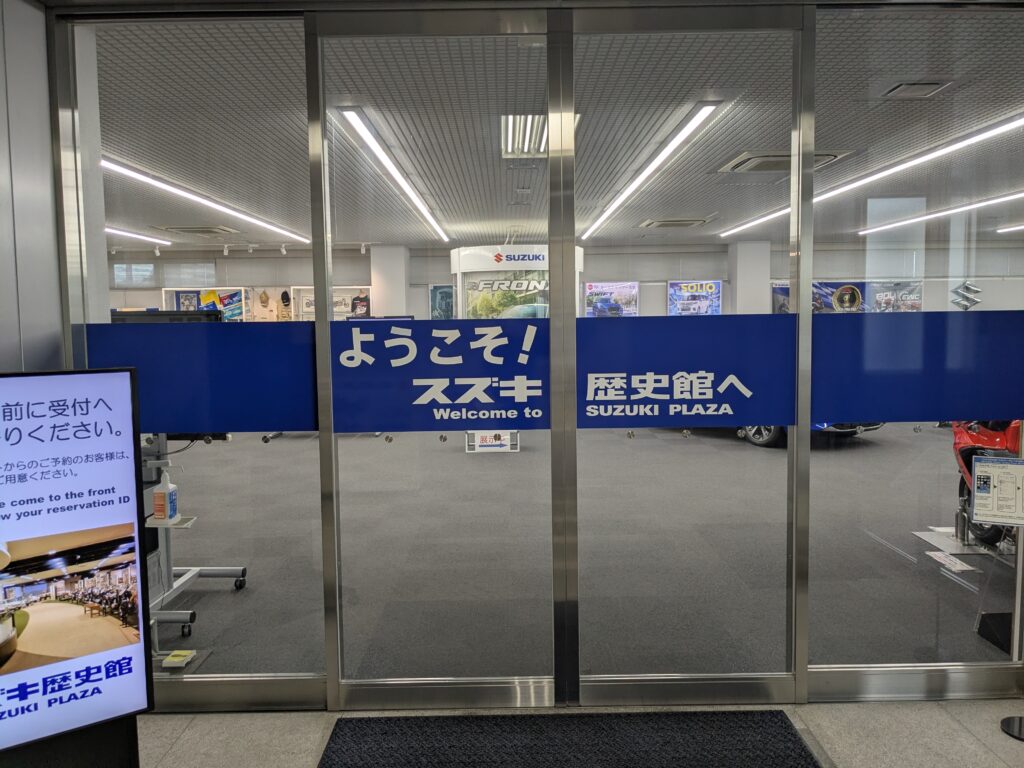
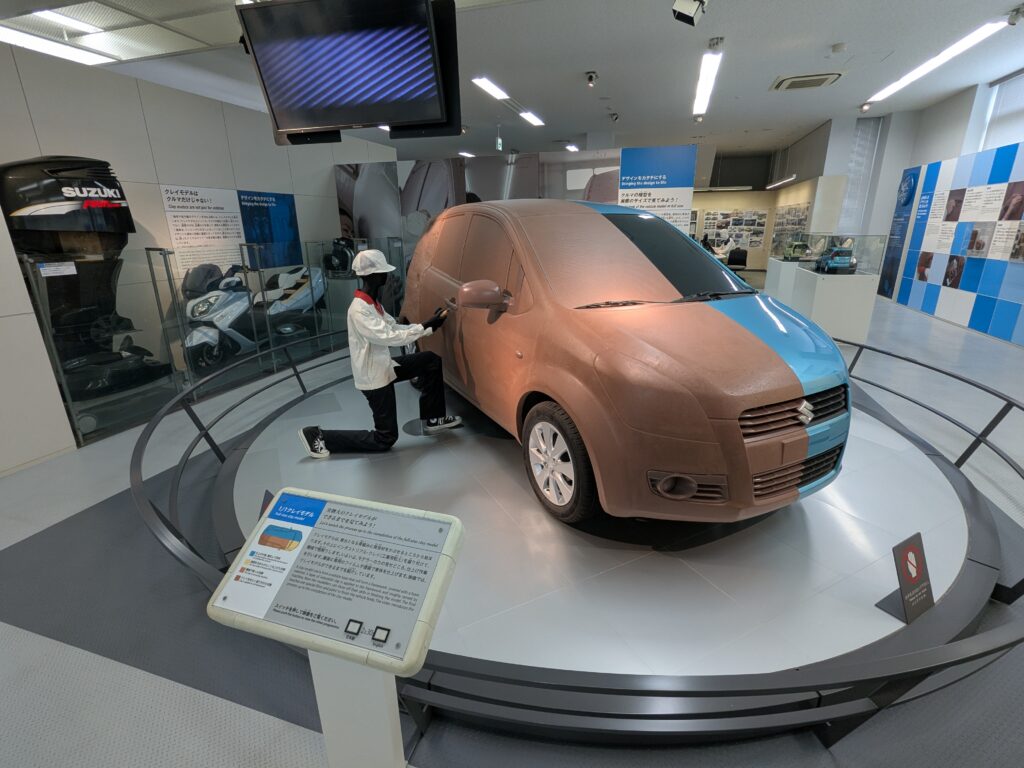
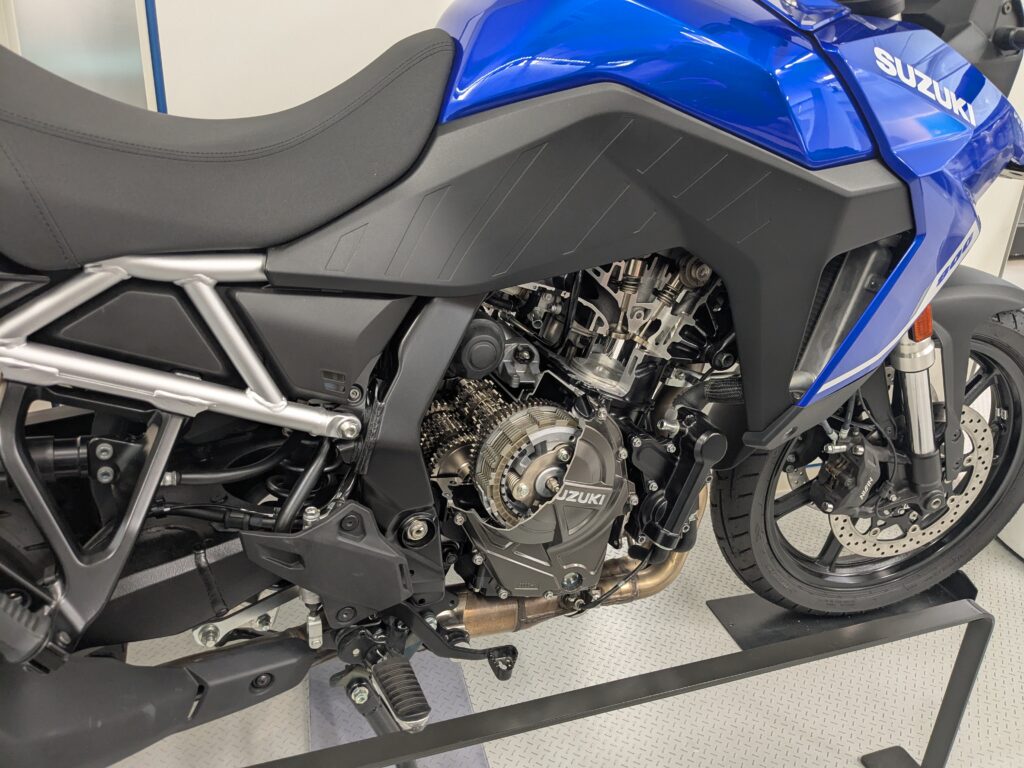
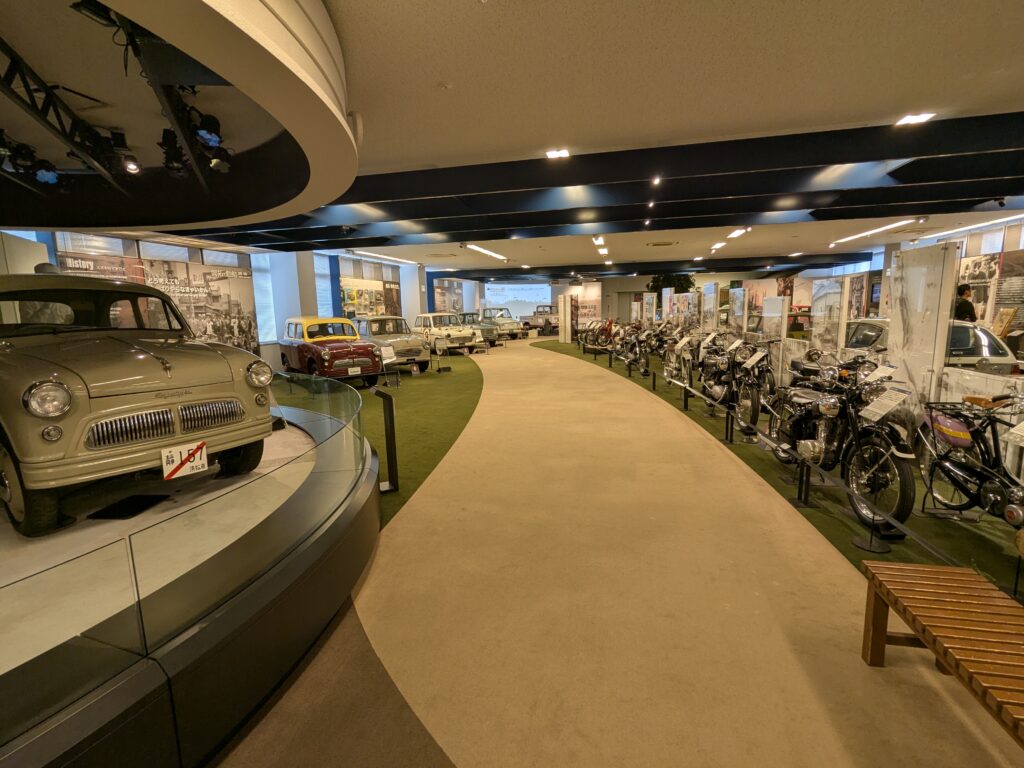
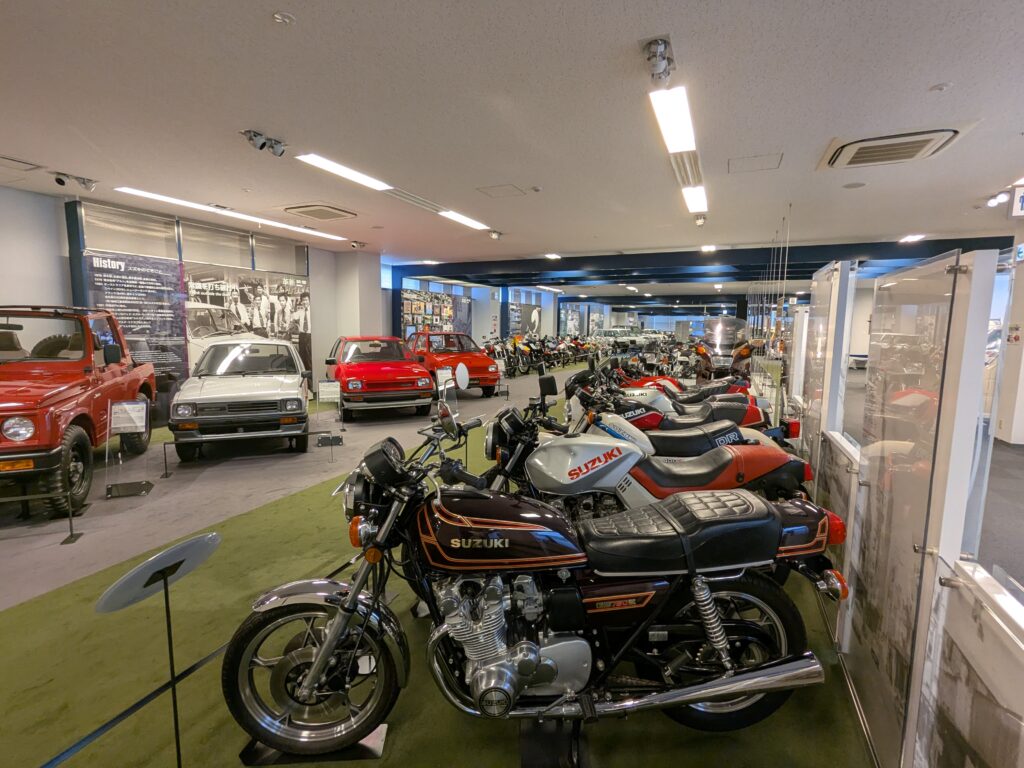
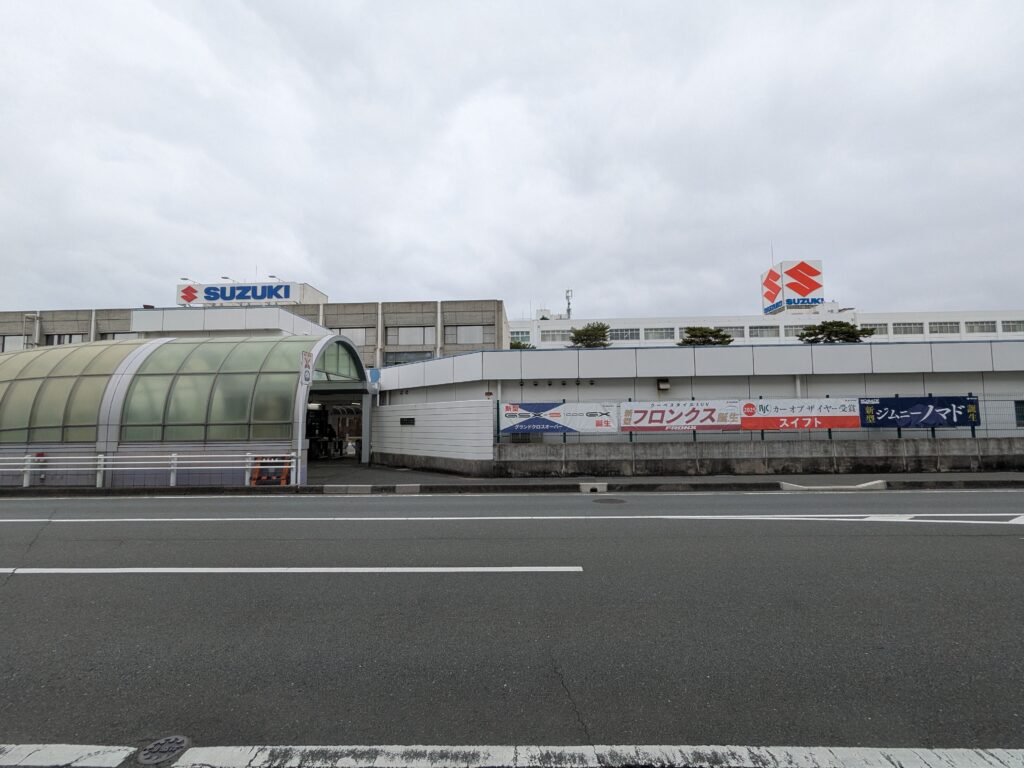
Las night I tried booking a place to visit Suzuki Plaza and I was lucky. I visited Suzuki Plaza before heading west.
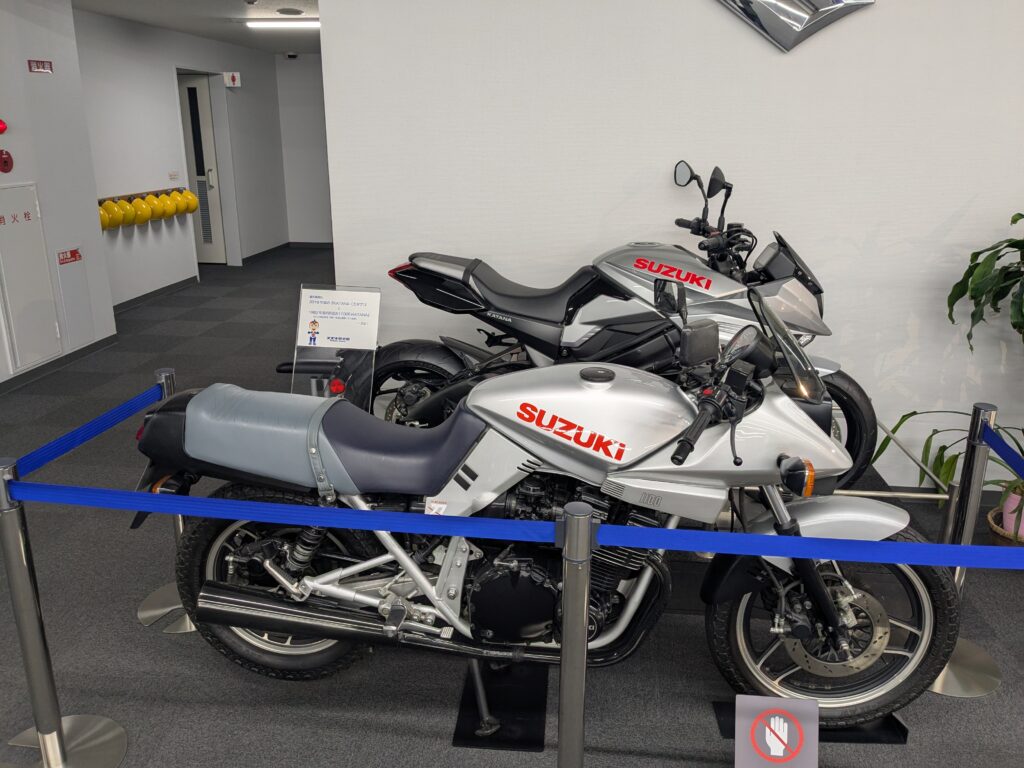
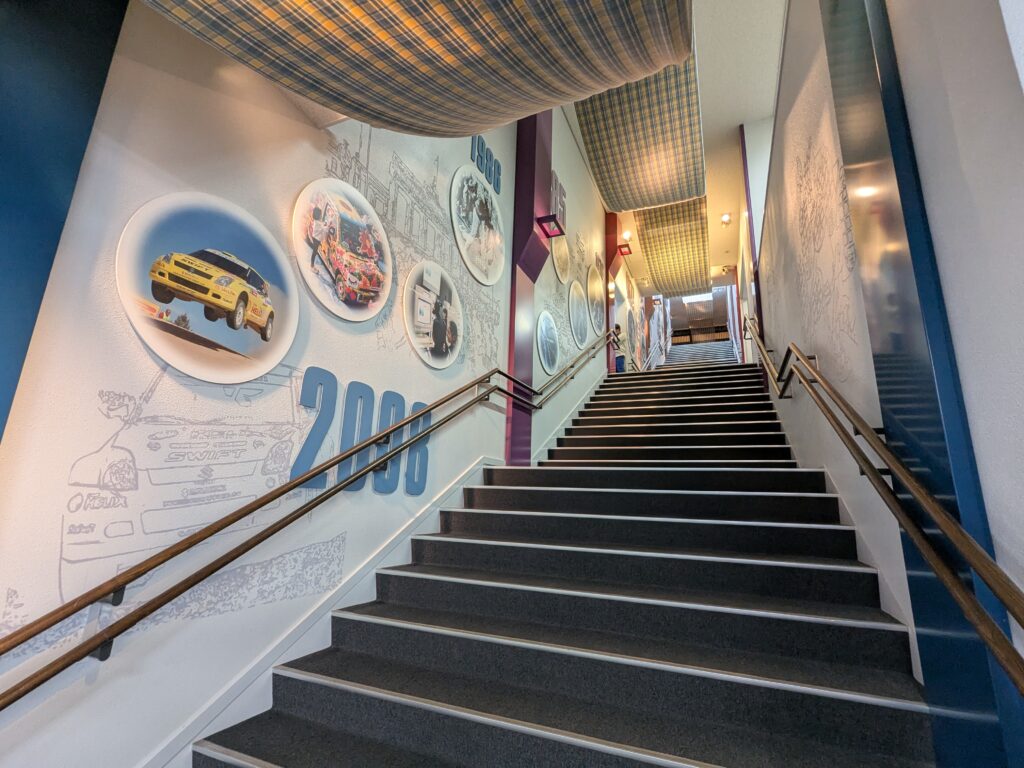
The Plaza is in the middle of Suzuki town. In the large building, there were full of their motorbikes and cars. There was a large section that imitate a car assembly line. At the parking space a person in charge kindly advised me that I would be able to receive a sovenior at a machine. I managed to found the michine and it gave me a capsule.
The Suzuki town looke more dominant than Yamaha. Suzuki name and logo were everywhere. Probably because Suzuki makes cars and motorcycles here.
Now, I have visited Yamaha, Honda, and Suzuki places. My motorcycle pilgrimage is 3/4 done. The last one, Kawasaki, is in western Japan, and it is in a city area. I am afraid I have to miss it.
When I found that there was a ferry between 'C(Irago)' and 'D(Toba)' on the map to avoid a dense city area of Nagoya, I was chuffed. The ferry is called Isewan-ferry (Ise Bay Ferry).
I headed to Irago to catch a ferry. The tree types changed to more tropical trees, showing the warm climate of the area.
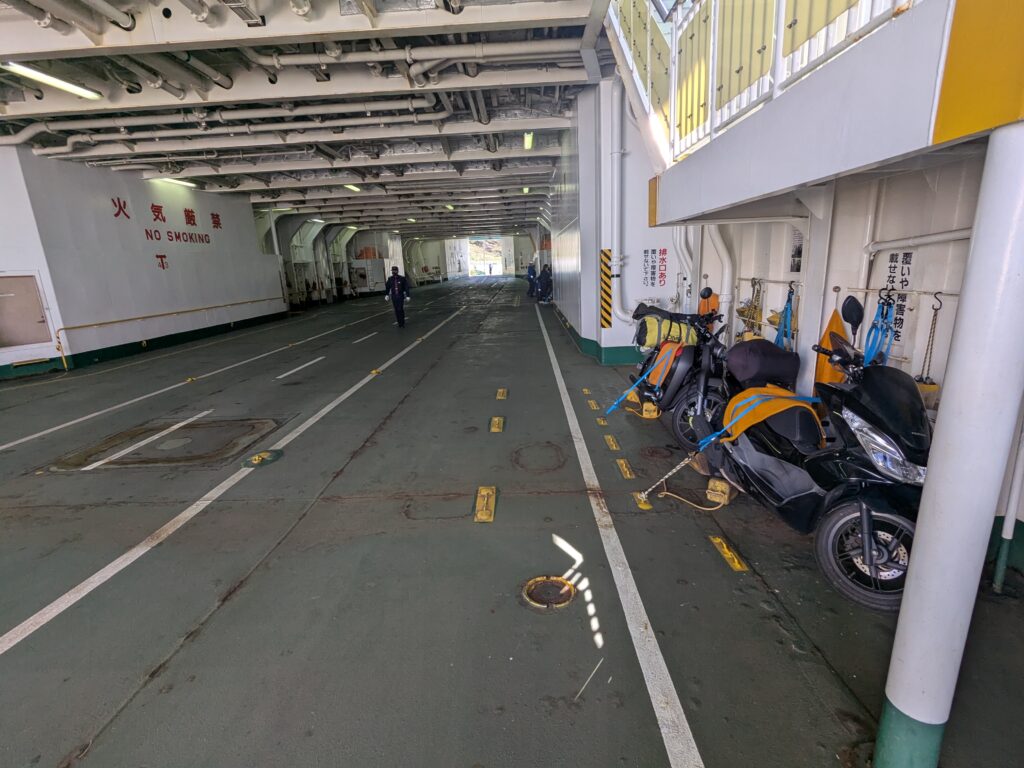
I learnt through experience, but each ferry has its booking process. The Isewan ferry allows ten motorbikes to be booked. They have some extra places for motorbikes, which are reserved for those who turn up without booking. The extra spaces are offered by a first-come, first-served system, so if the spaces run out when you turn up, that is it.
What was common was that you did not need to tie your motorbike by yourself. The crews did the tie-up for me. In Europe, it is varied. At one time, the guy just pointed at the tie-up cables on the wall.
I did not book and just turned up. A middle-aged lady rider was already there and gave me advice on where to buy a ticket. She seemed to be a traveller like me, but I minimised chatting with her. I read somewhere that lady riders are tired of being chatted up by male riders.
Ferry is always a wee bit exciting to me, regardless of the size of the boat. I enjoyed the cruise to Toba.
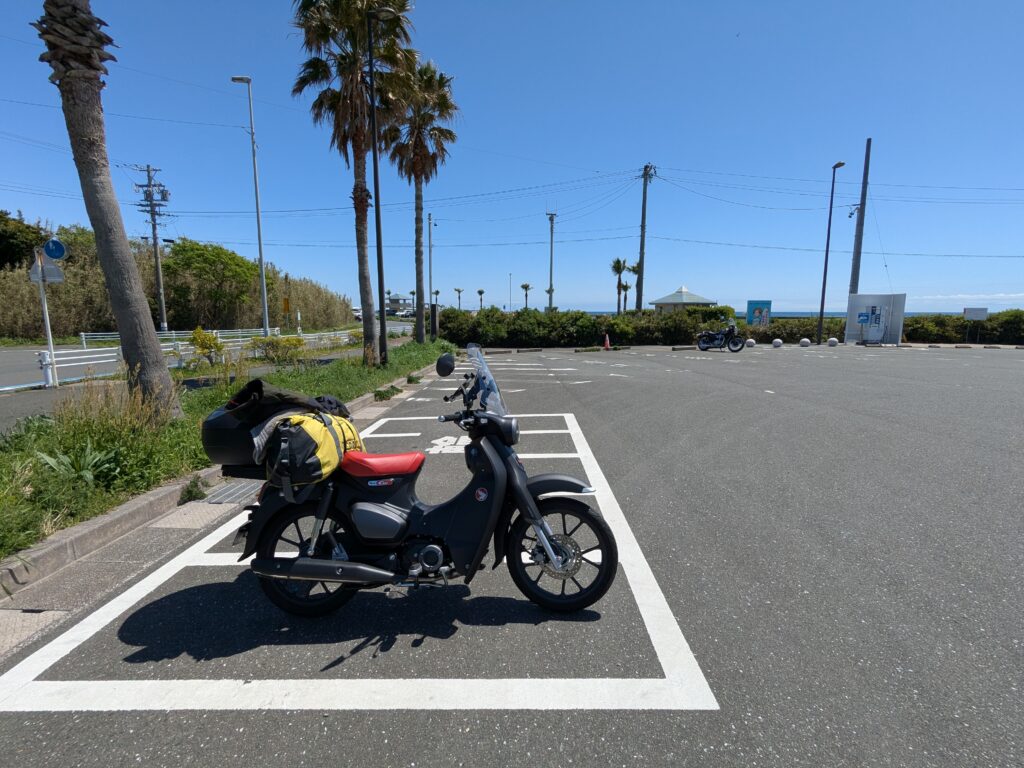
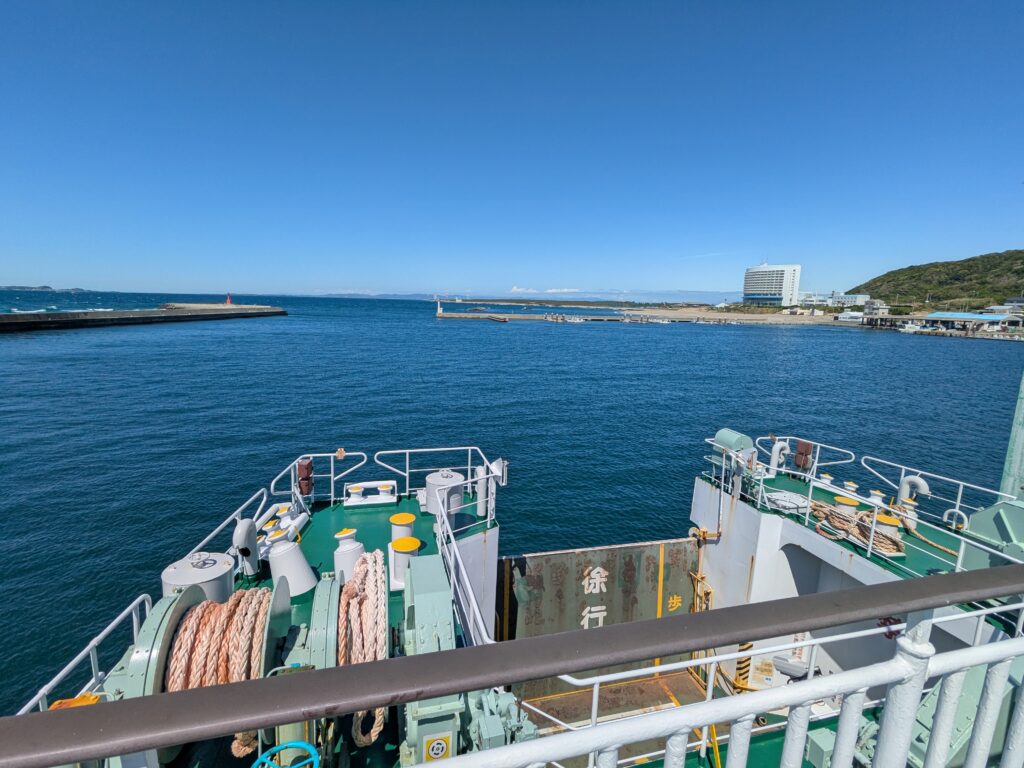
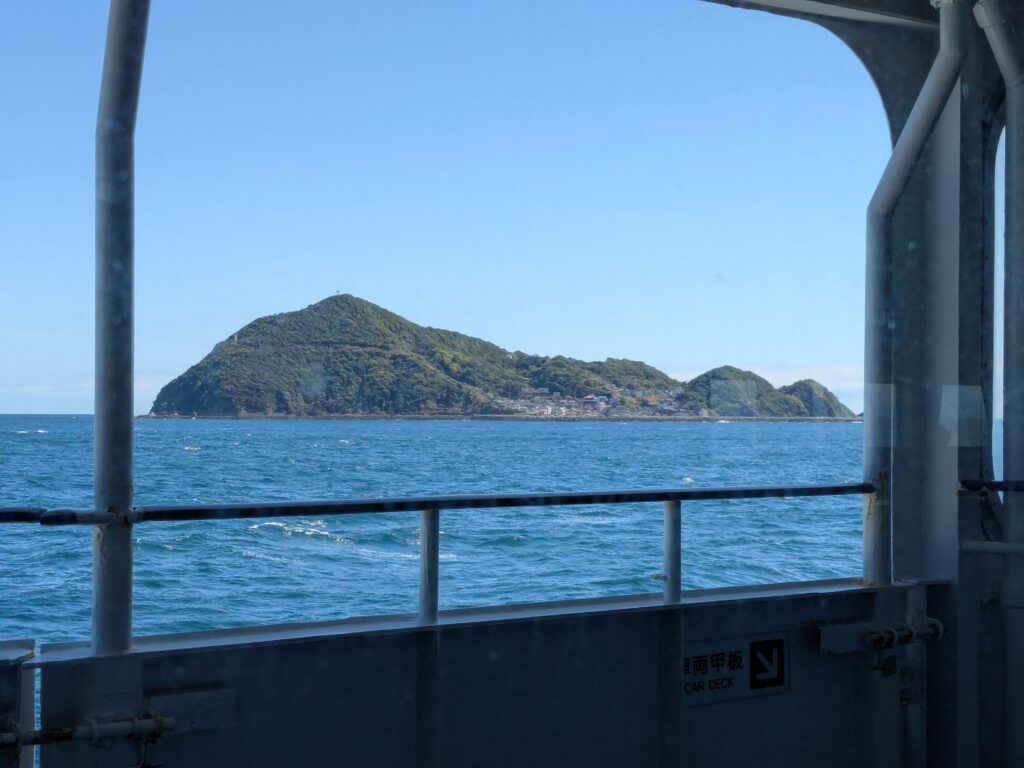
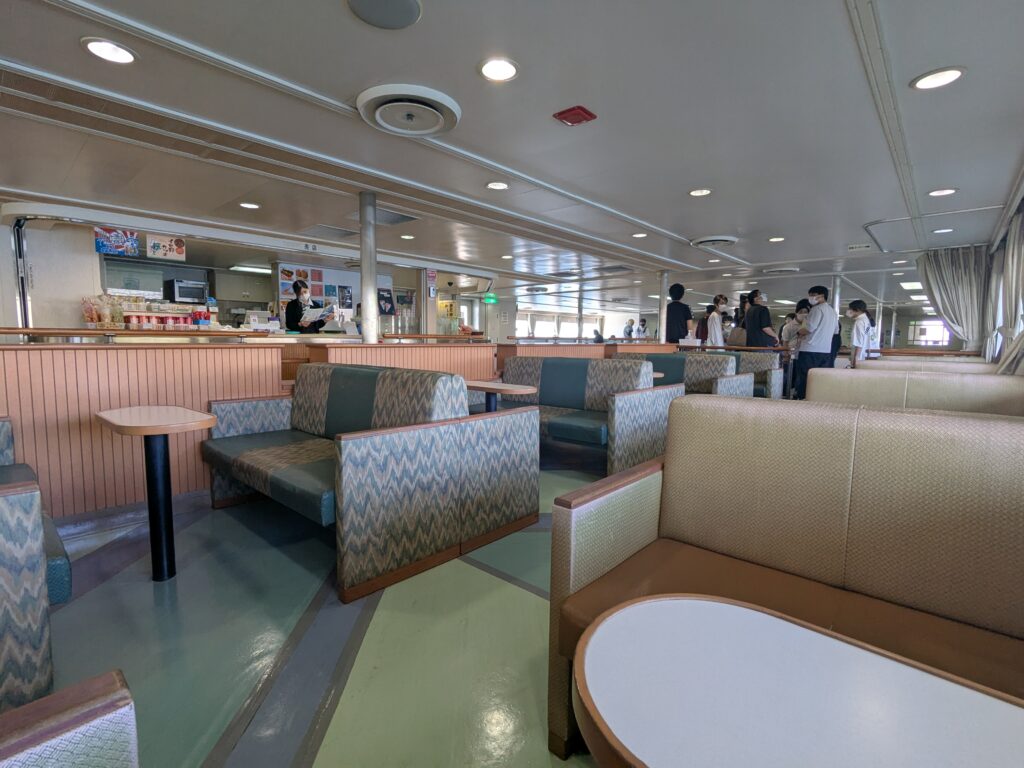
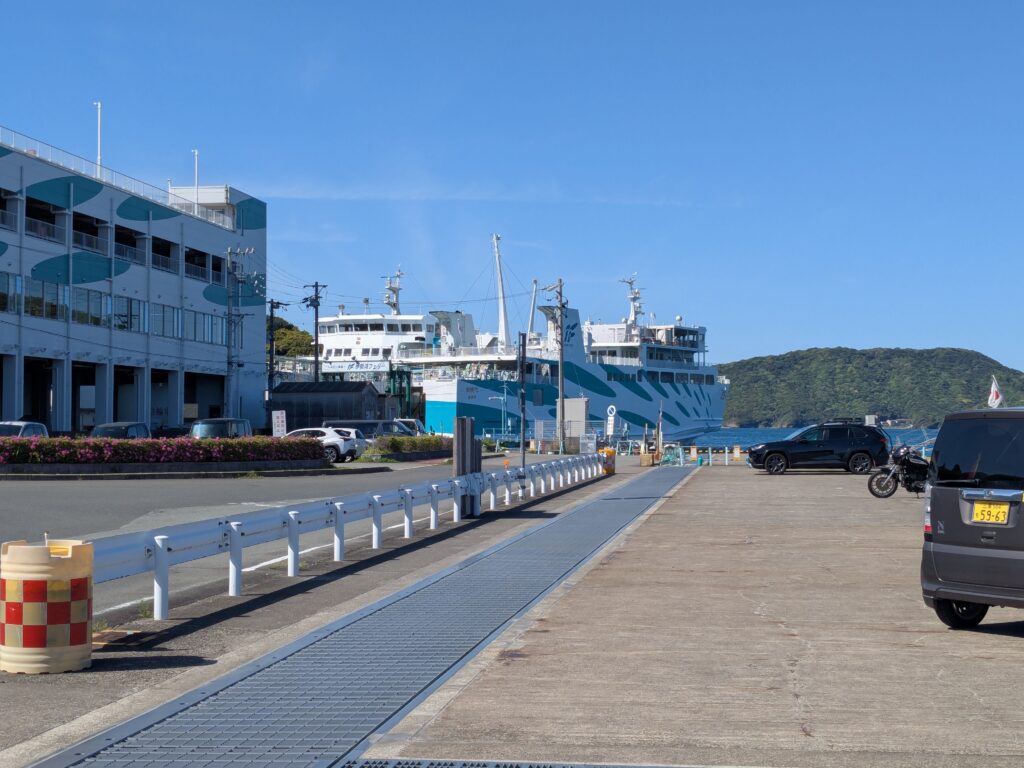
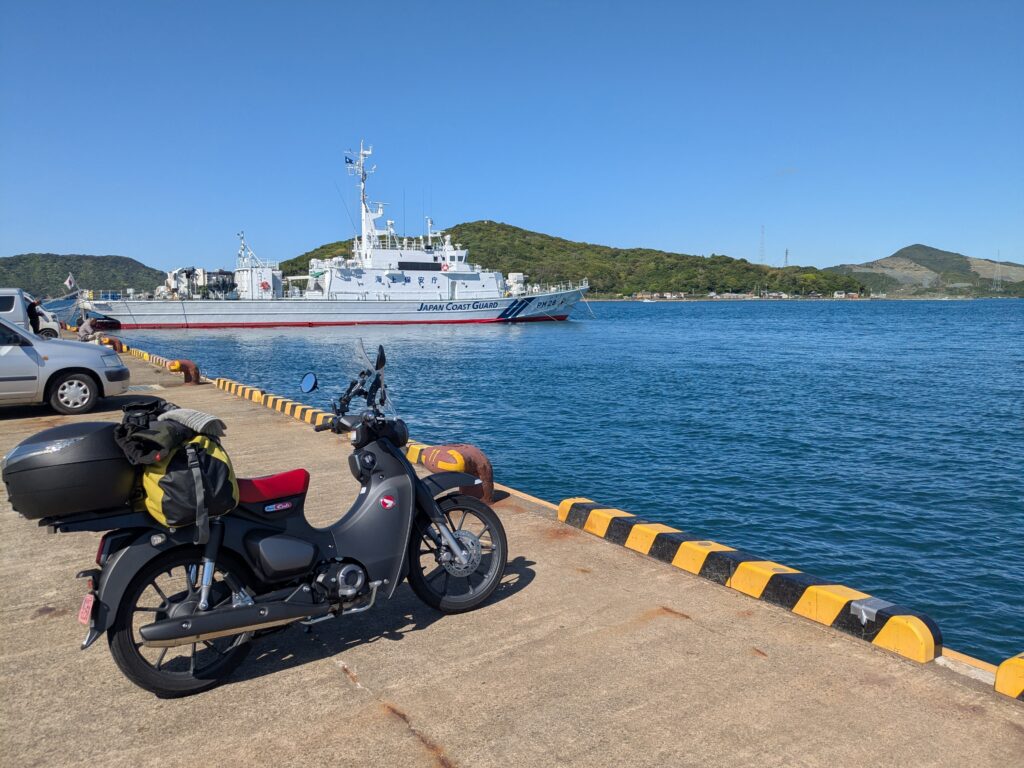
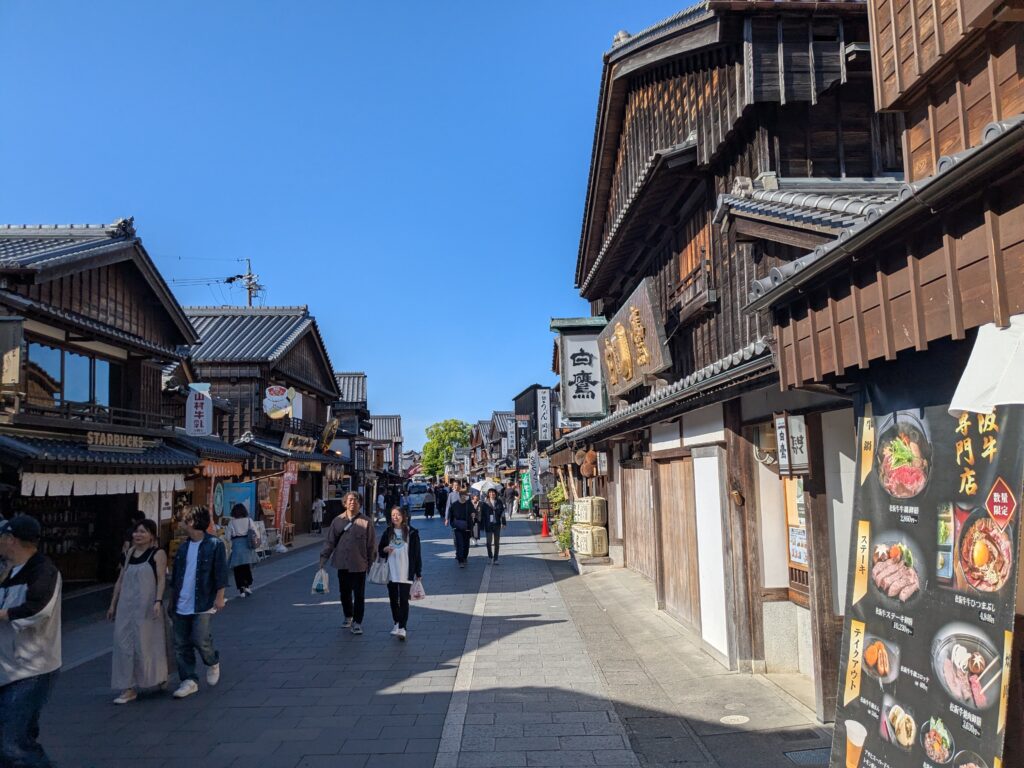
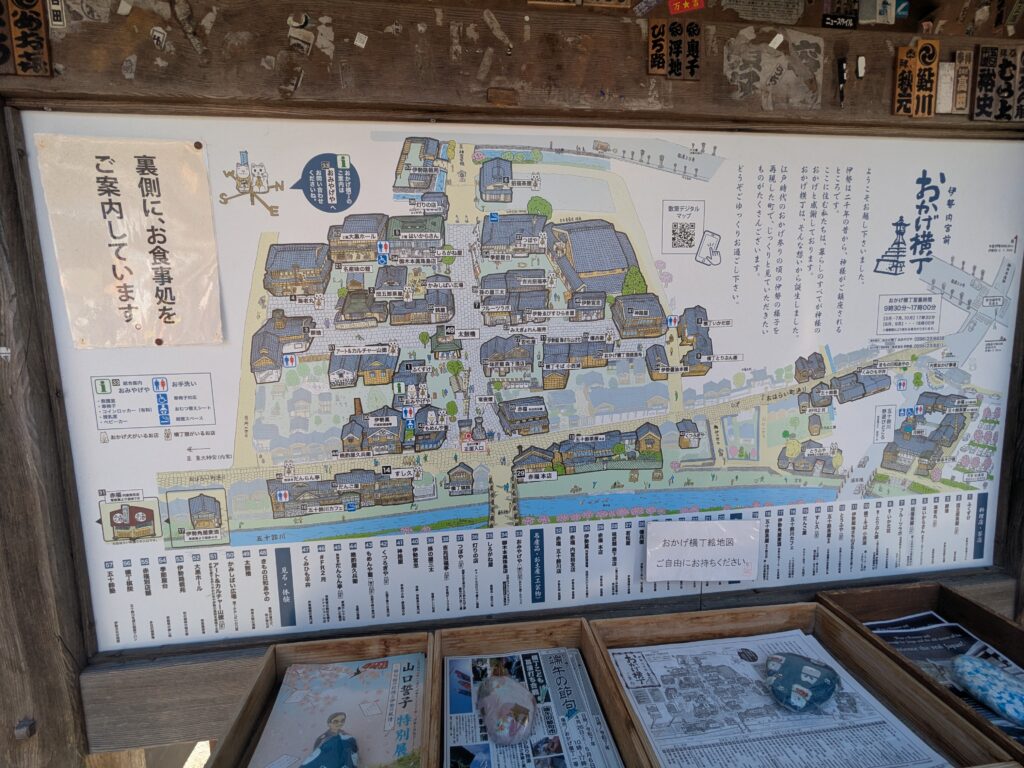
After landing on the other side, I headed to 'Okage-yokocho'. There is the HQ of all Japanese shrines, called Ise Shrine. For pilgrimages, a food section grew, which is called 'Okage-yokocho'. That is where I was going.
It was a warm day, but luckily, there was a motorbike parking space close by, and it was free. I entered a well-known place, 'Wakamatsuya', for a Kamaboko. Mine was called 'Hiryouzu', which contained various ingredients, and it was tasty.
I wanted to make progress, so I did not stay long. After the quick lunch, I started riding. It was one of my aims to ride along the coastline of southern Wakayama.
From Ise to the seaside, I had to ride through a mountainous area. The sun was setting, and the darkness fell. I noticed that the headlight of C125 was so weak and the spread of light was narrow. It did not help riding a mountain twisty road. I had to slow down to see ahead, which slowed my progress.
I stopped and started looking for an accommodation. Soon I realised that I was too late to start finding an accommodation. There were only expensive places left, and none were close to me. I accepted my fate and booked one.
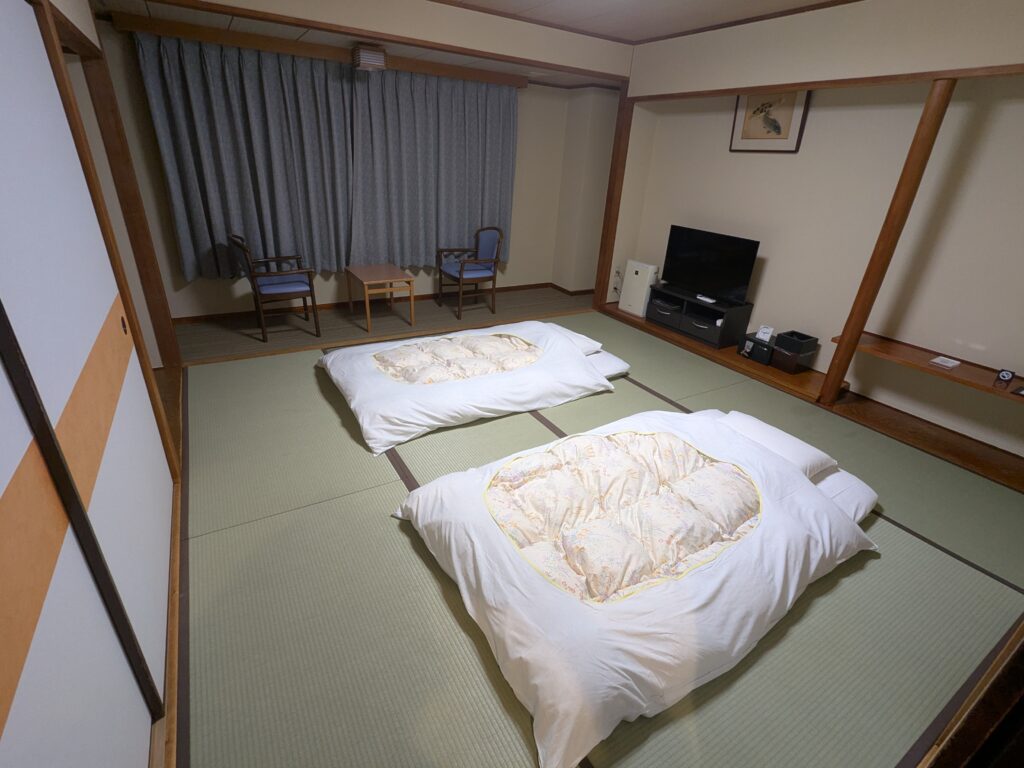
When I arrived, it was half past seven. As it was a proper Japanese Inn, I had a lovely evening meal inside the Inn and changed into a Kimono (Yukata) and enjoyed an Onsen.
After days at a rider's house, it was a good change.
Day 4: Kumano to Hidaka
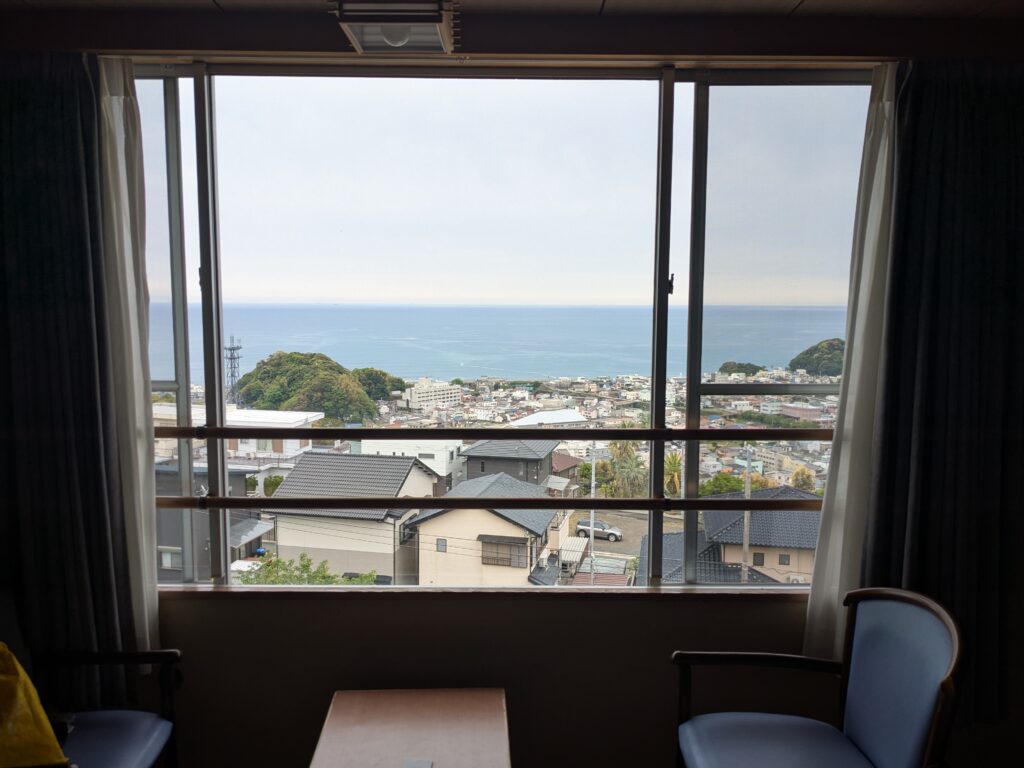
When I arrived at the accommodation, I knew I had climbed uphill, but it was dark. This was the view that I should have enjoyed yesterday.
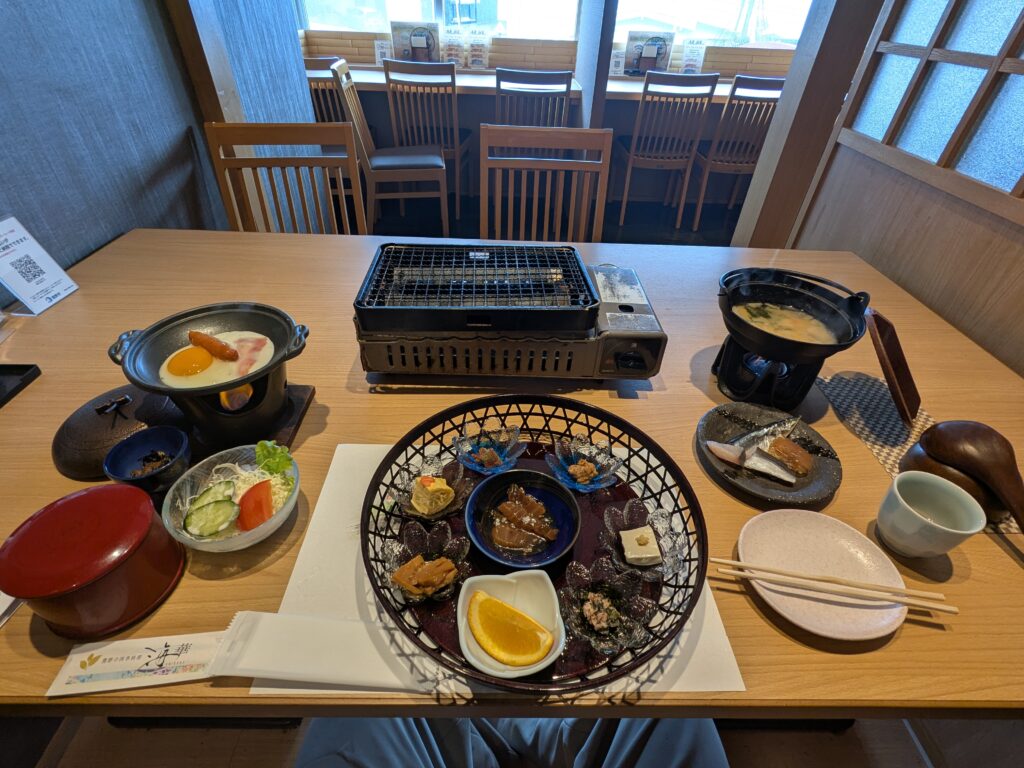
I added breakfast when I checked in last night. It turned out to be one of the most luxurious breakfasts. I felt I wasted money since I could have done it with just one or two Onigiri and a coffee from a convenience store.
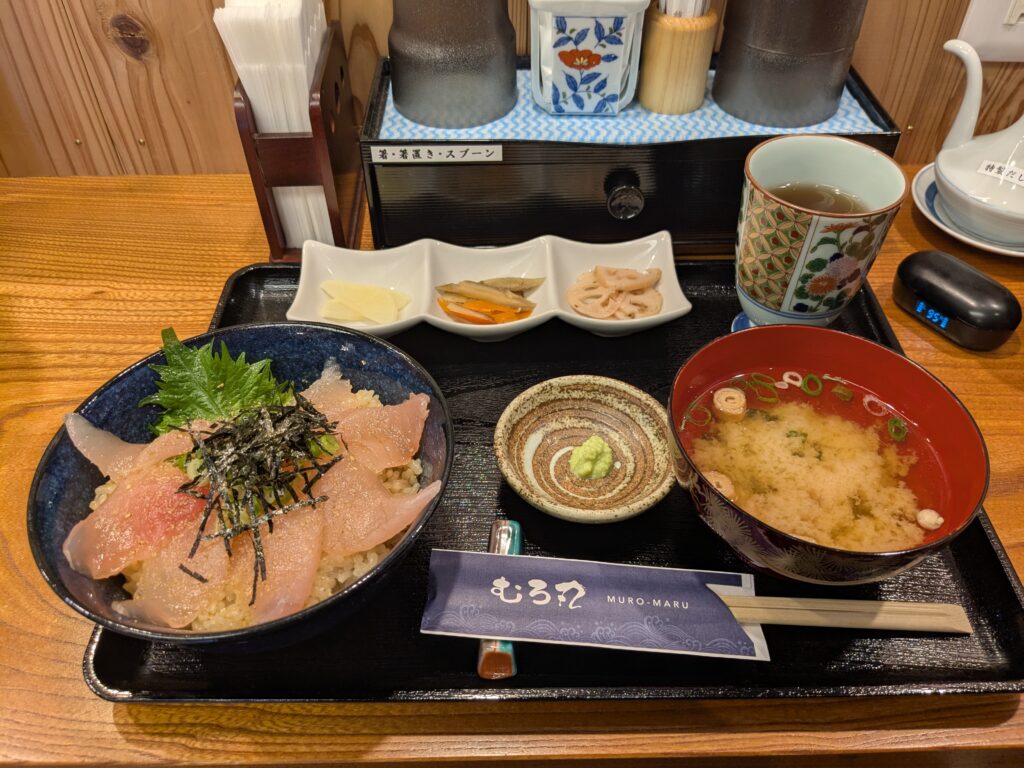
The next destination was Nachi-Katsuura. I wanted to sample the Tuna rice bowl because Katsuura was famous for being a major Tuna fishing port. It was good. Why just 'good'? It is because I was spoiled by the top-quality fish from Toyosu when I was a student at a Sushi chef college. I heard the same comment from the restaurant chef that the best one goes to Tokyo for top money.
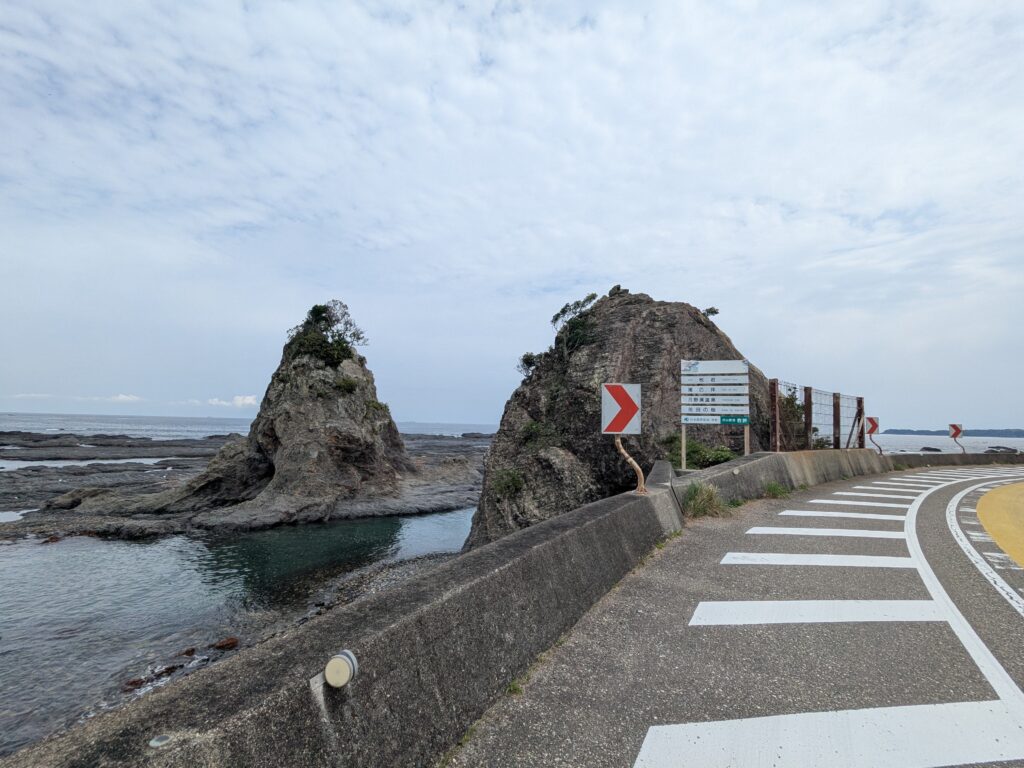
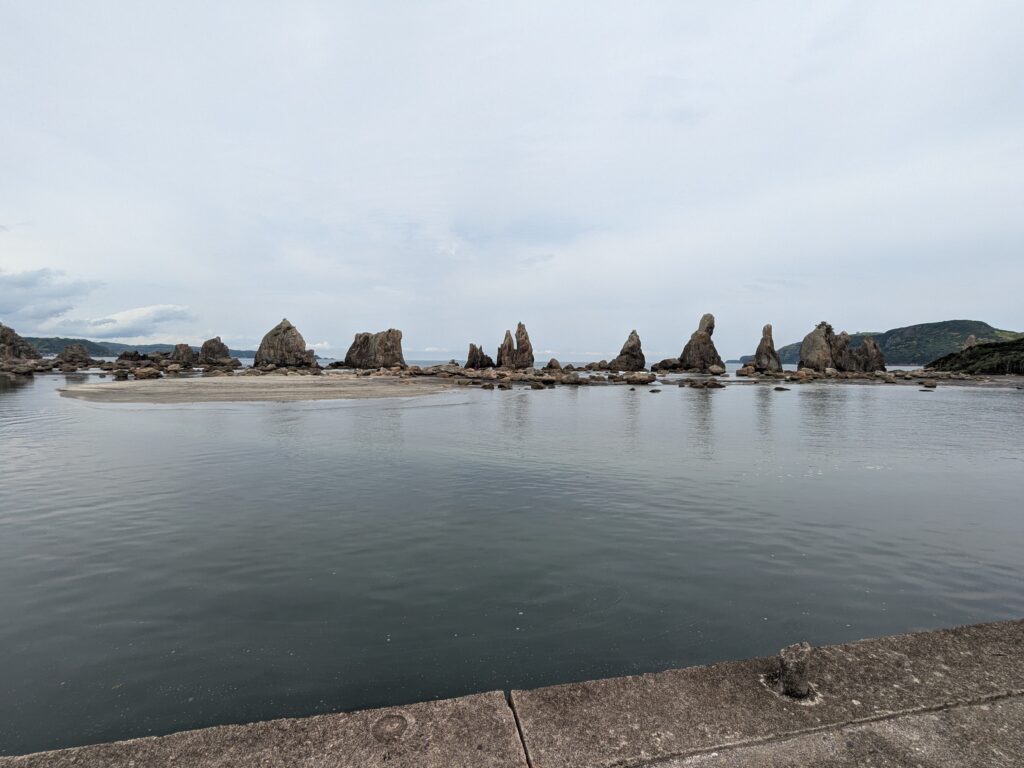
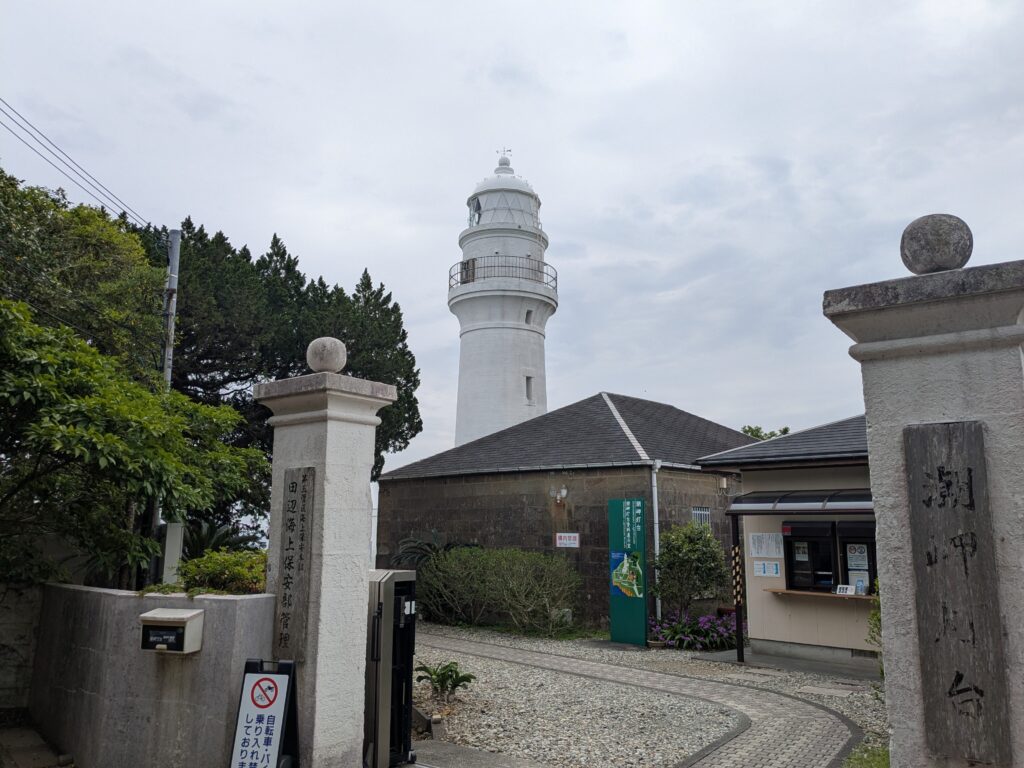
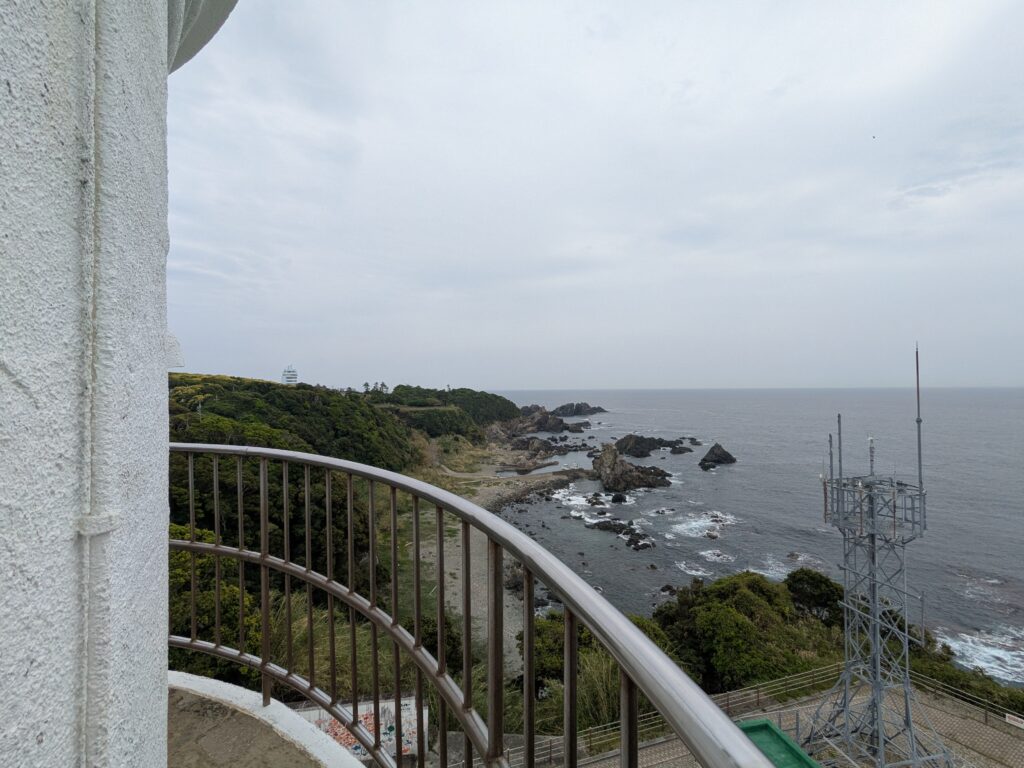
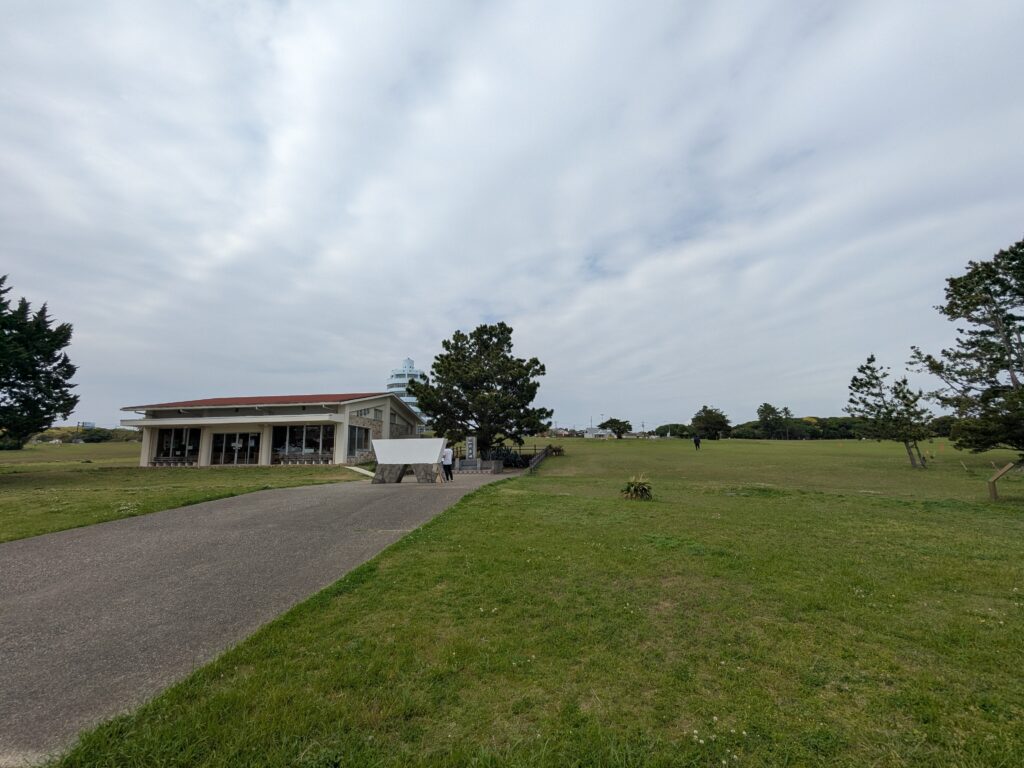
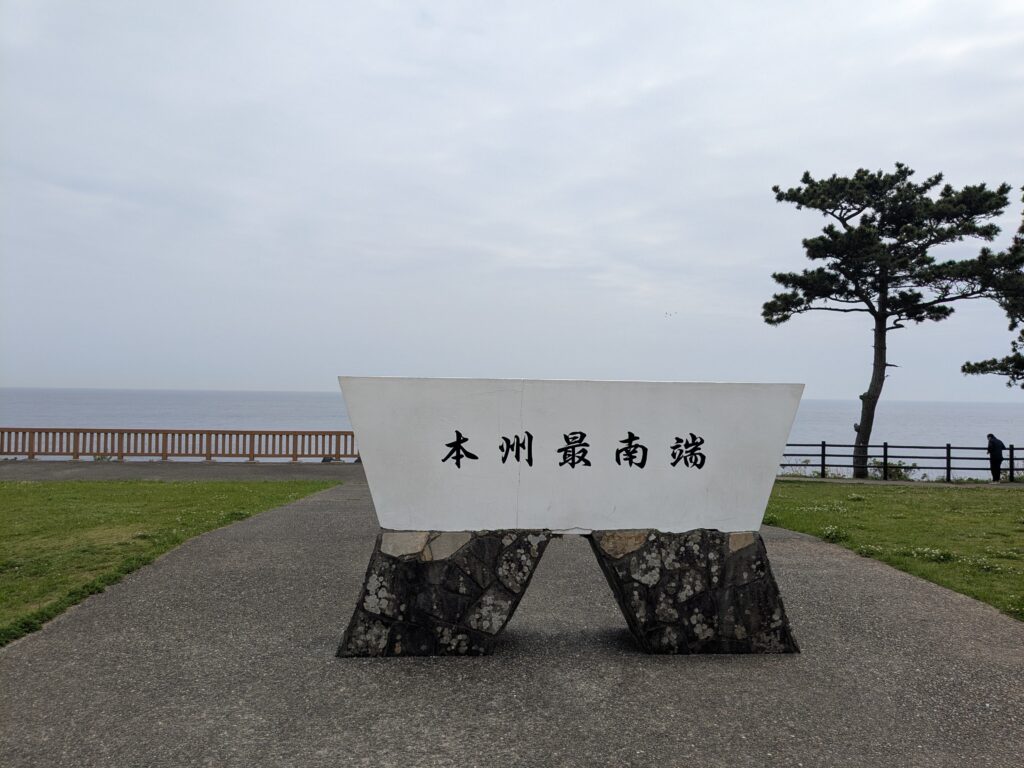
When I ride in a country with left-hand side traffic, I make my best effort to ride clockwise, as I can keep riding along the seaside.
During Wakayama, it worked very well. I enjoyed views of Ishikiri-iwa and Hashikui-iwa (iwa means rock(s)).
Then I reached the most southerly point of Wakayama, Kushimoto. As all motorcyclists go to the edge of land, I naturally went to the monument of the most southerly point of the main island (Honshu).
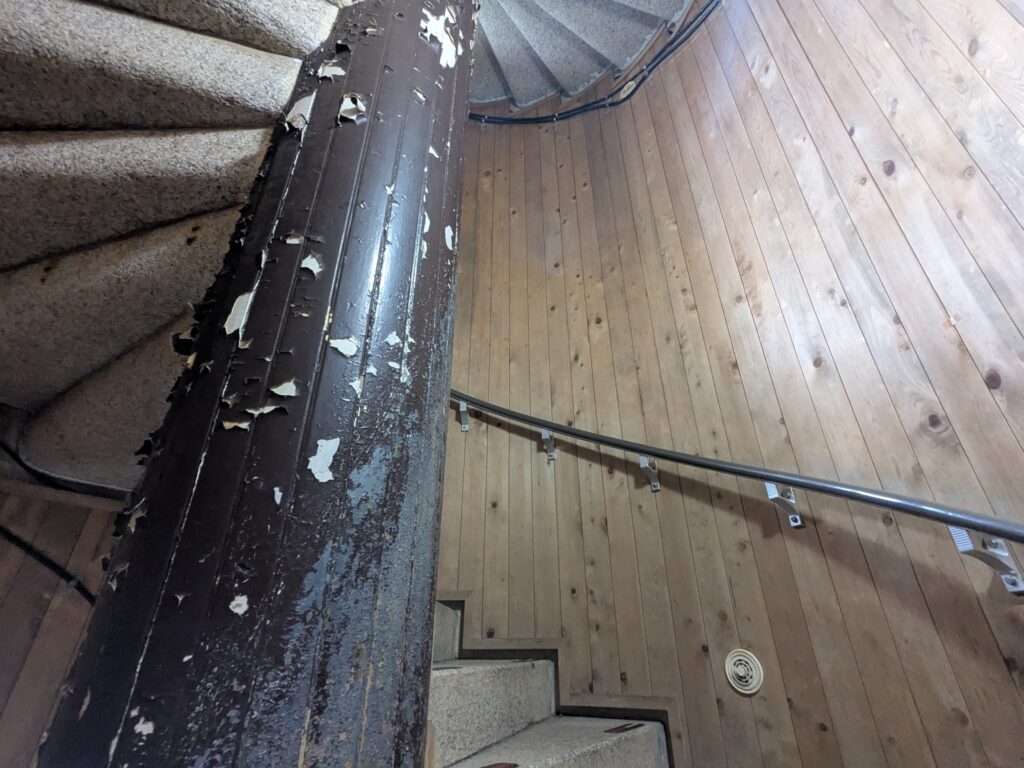
Before reaching the monument, I found a lighthouse, which I visited. With a small entrance fee, people were allowed to climb up the lighthouse.
I rode to the west side of Wakayama (Kii penishula) to catch another ferry the following day. I stayed at another rider's house called Raruku. It was slightly inland and next to a river, but I did not have time to appreciate it as it was getting dark.
Unfortunately, I was the only person to stay, and the owner was not very keen to cook for one person, which is understandable. He recommended visiting an Onsen that offered nice food at its attached restaurant. He said the Onsen was just a small ride, but it was actually going over a small mountain. As I mentioned before, riding in the dark is not a strength of C125. Anyway, I managed to arrive and had a lovely meal.
Day 5: Wakayama port to Mid Shikoku
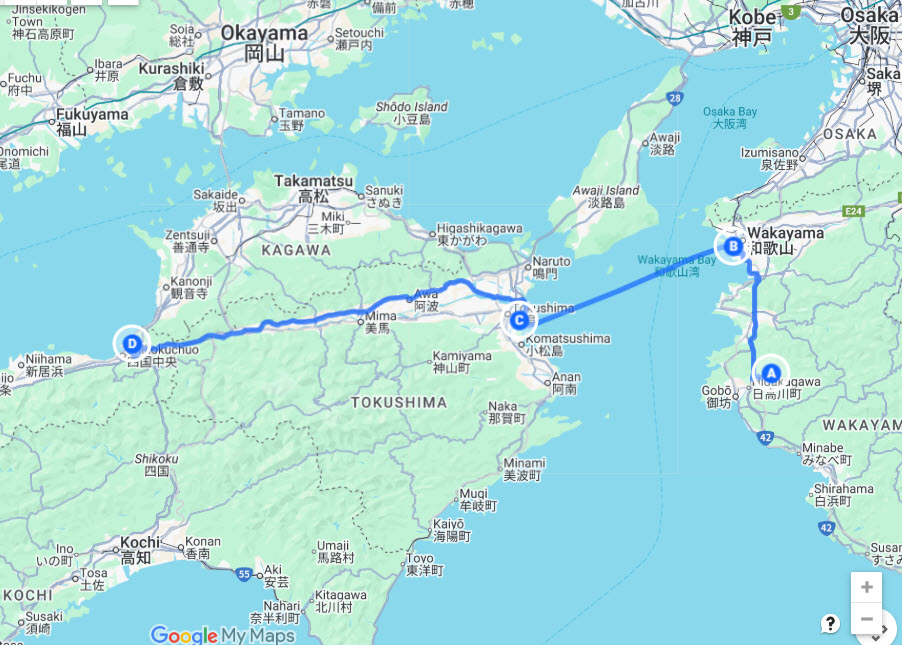
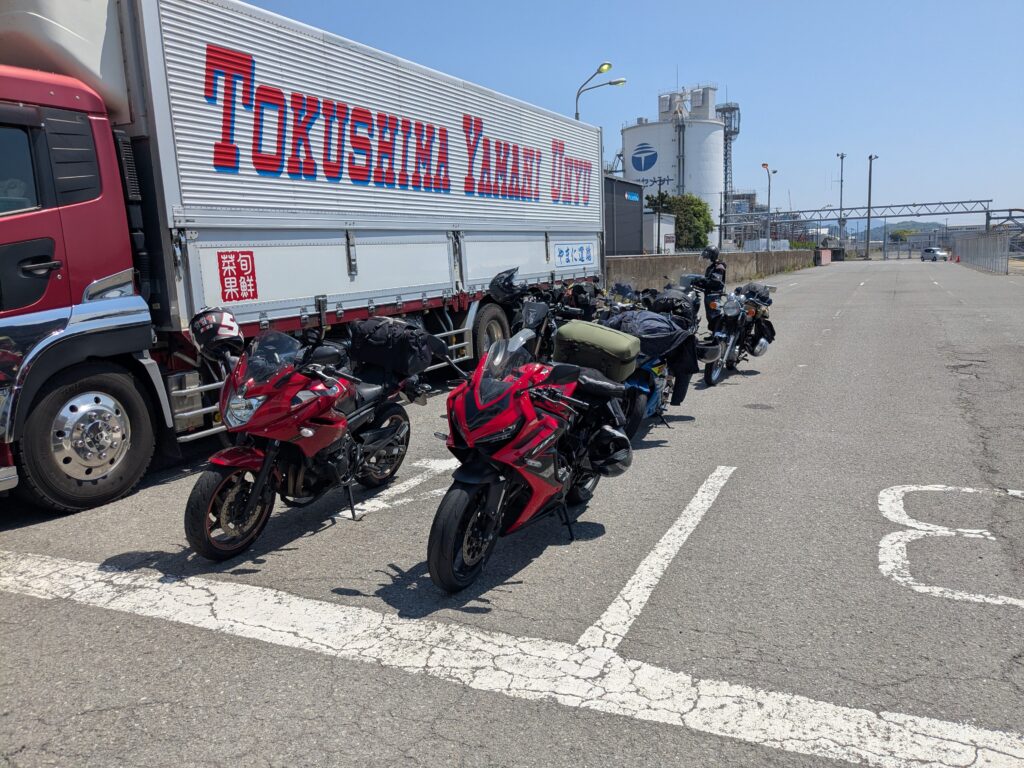
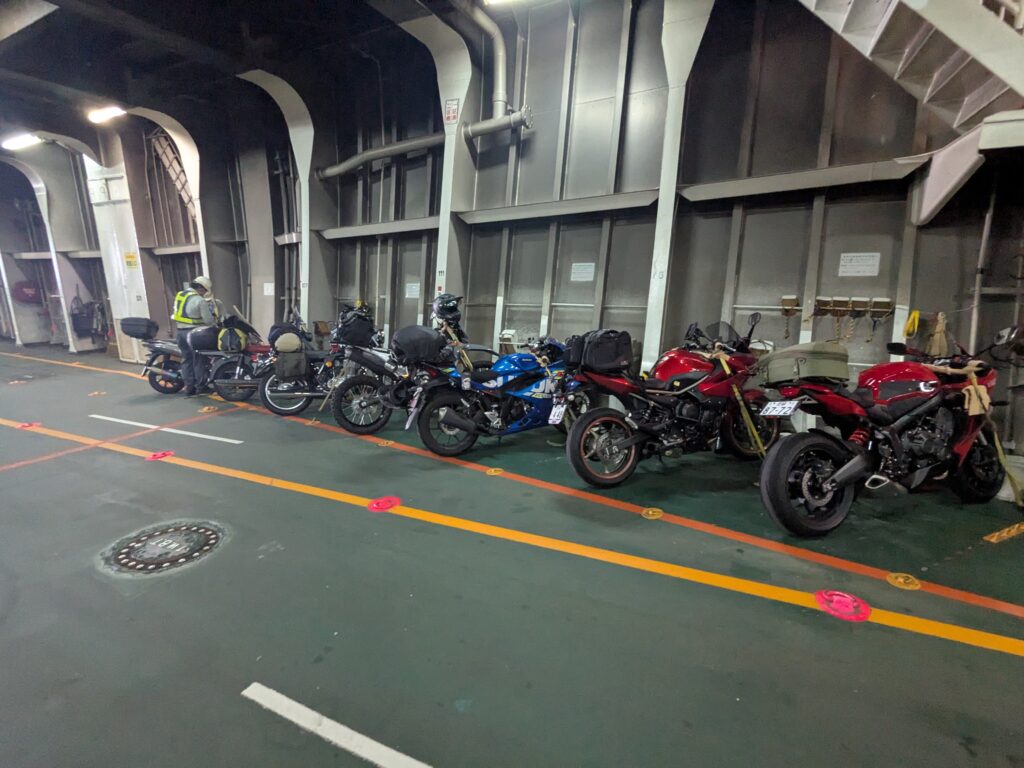
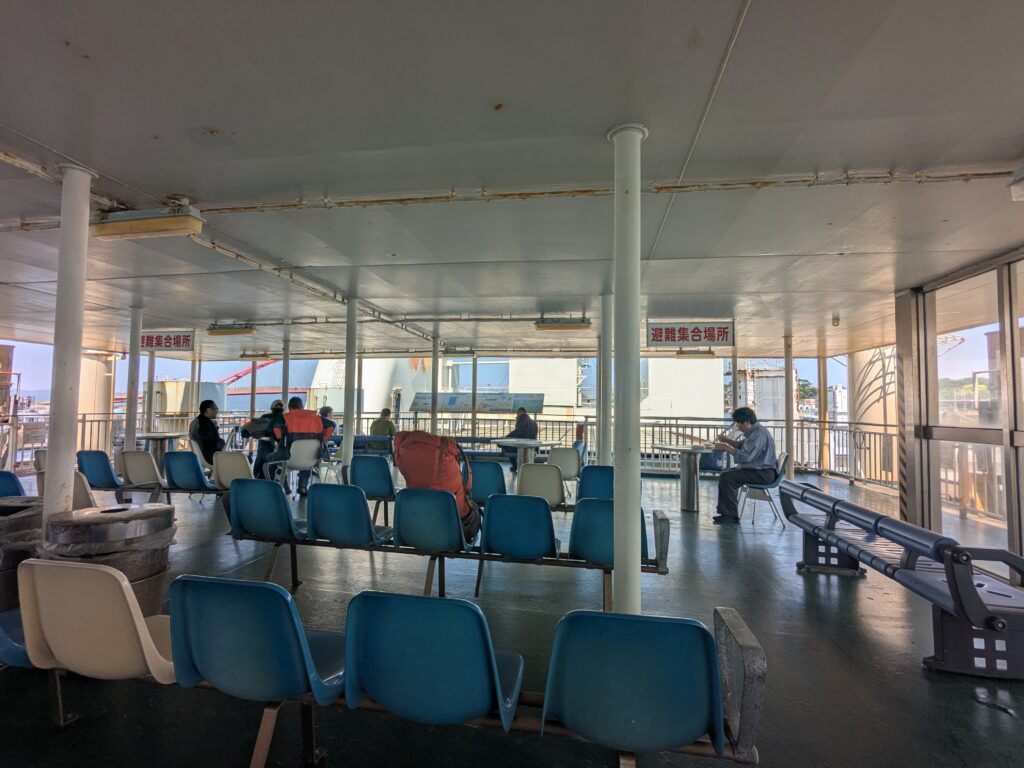
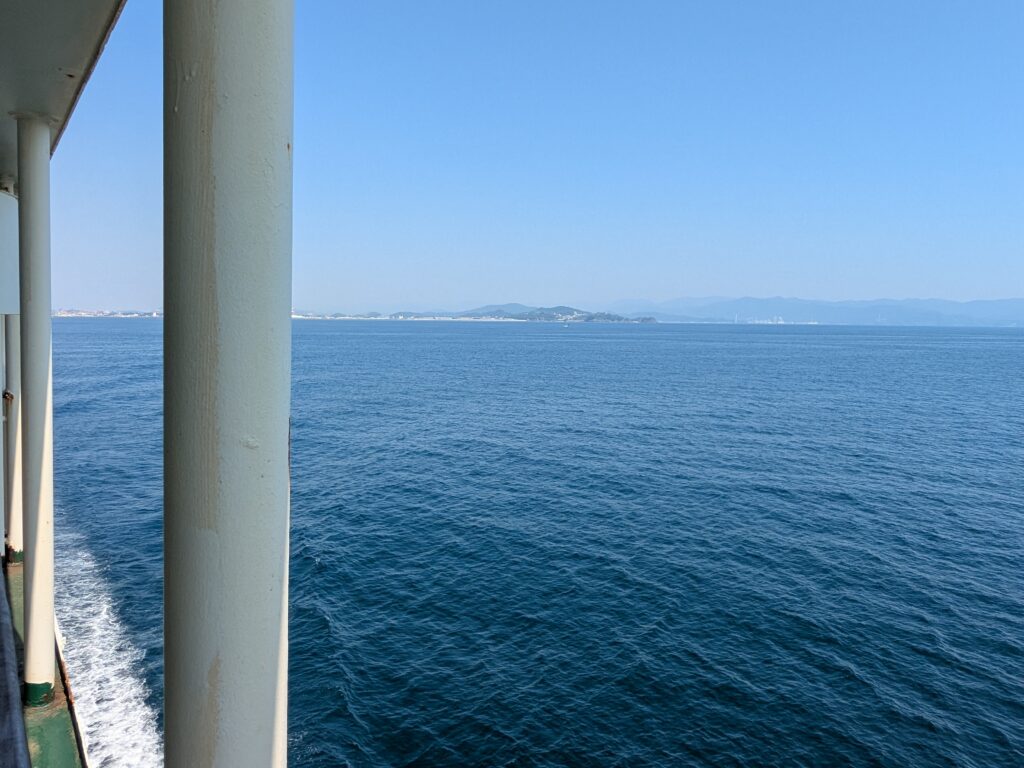
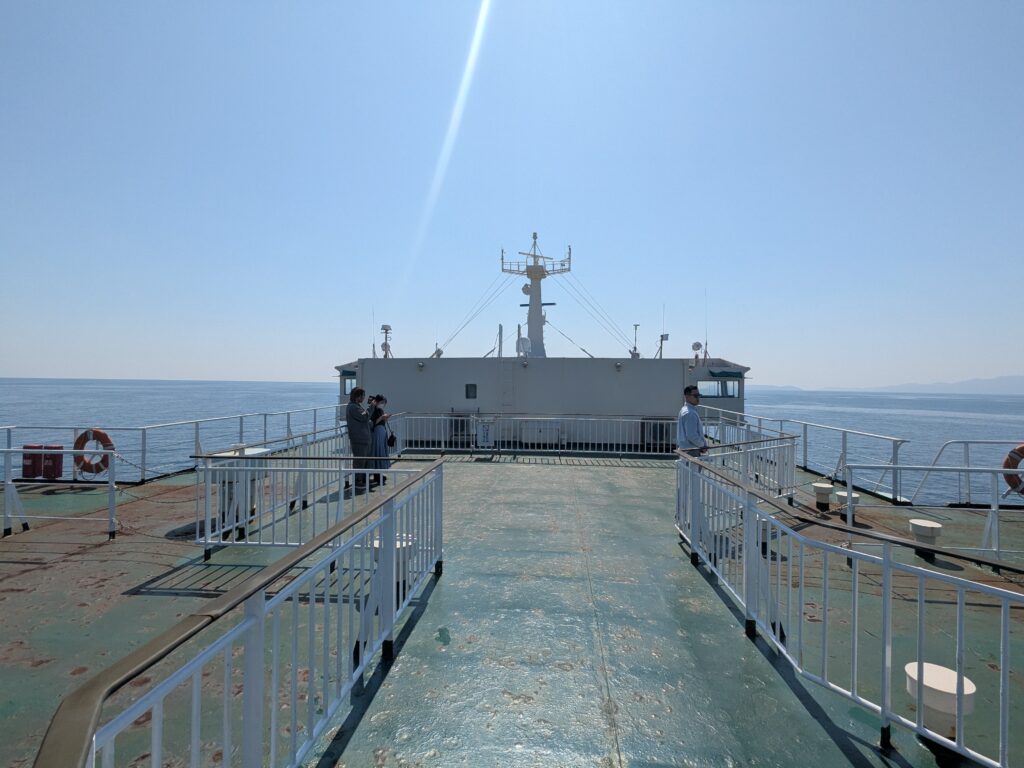
The ferry between Wakayama port and Tokushima port in Shikoku island is run by Nankai Ferry. They do not accept bookings for motorcycles, so I needed to go early to be one of the motorcycles that a boat can carry (about 20). They opened the counter one hour before departure, so we, motorcyclists, made a queue for about 30 minutes.
The ticket counter building and waiting area for a ferry are about two to three minutes apart.
I much prefer the more friendly atmosphere of the previous ferry, Isewan-ferry, but it was practical enough. I could avoid congested Osaka, Kyoto, and Kobe by taking the Nankai ferry.
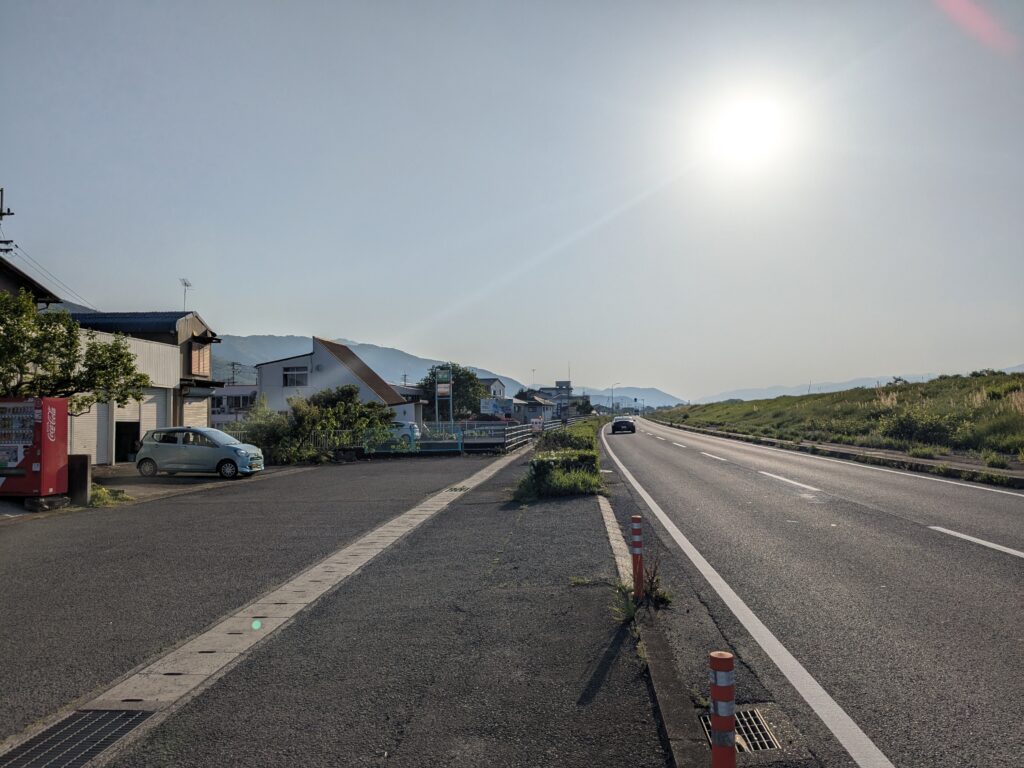
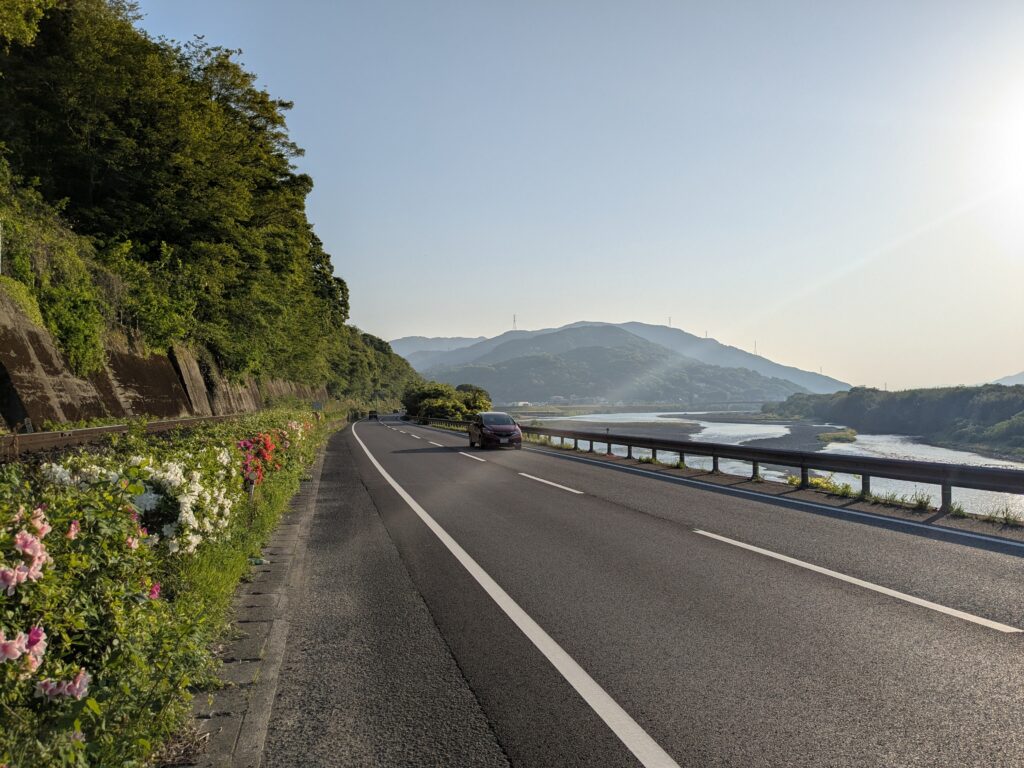
Now I am on Shikoku Island. After the ferry, I took a road that went along the Yoshino River. It seemed that the road and the river were next to each other forever.
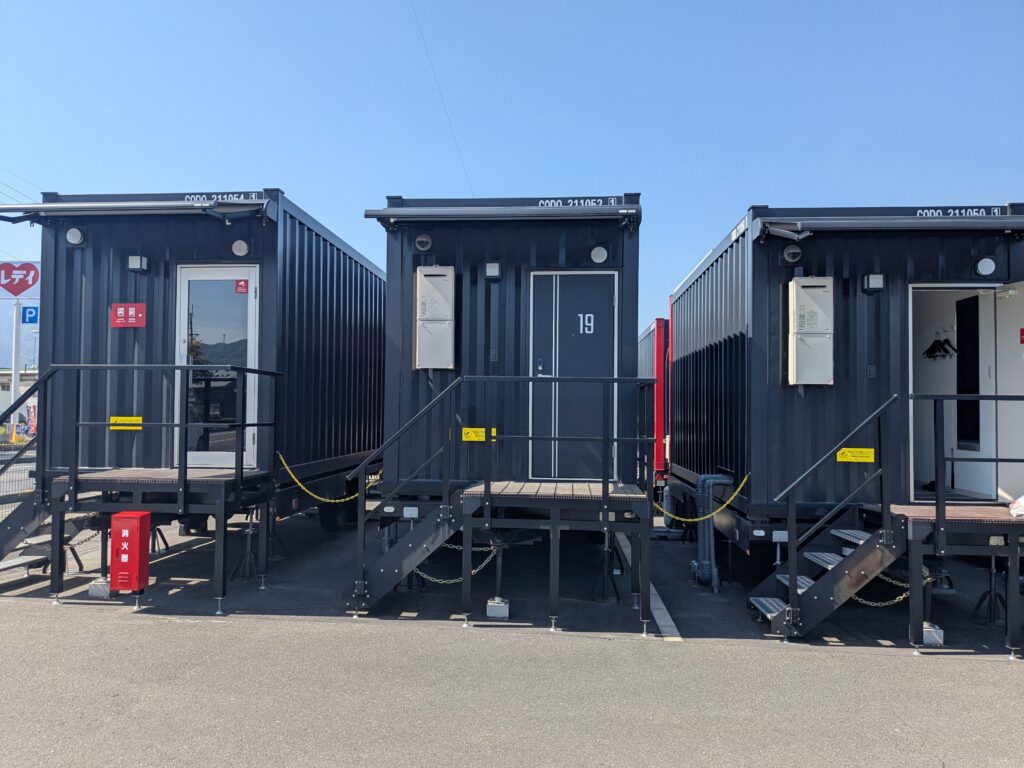
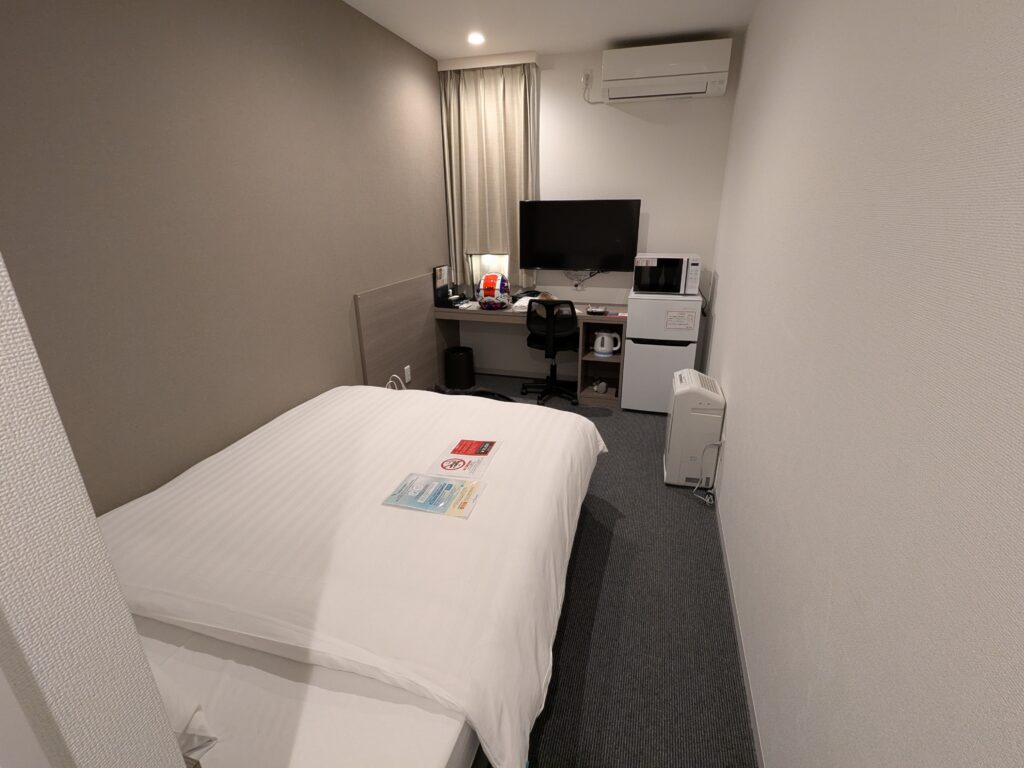
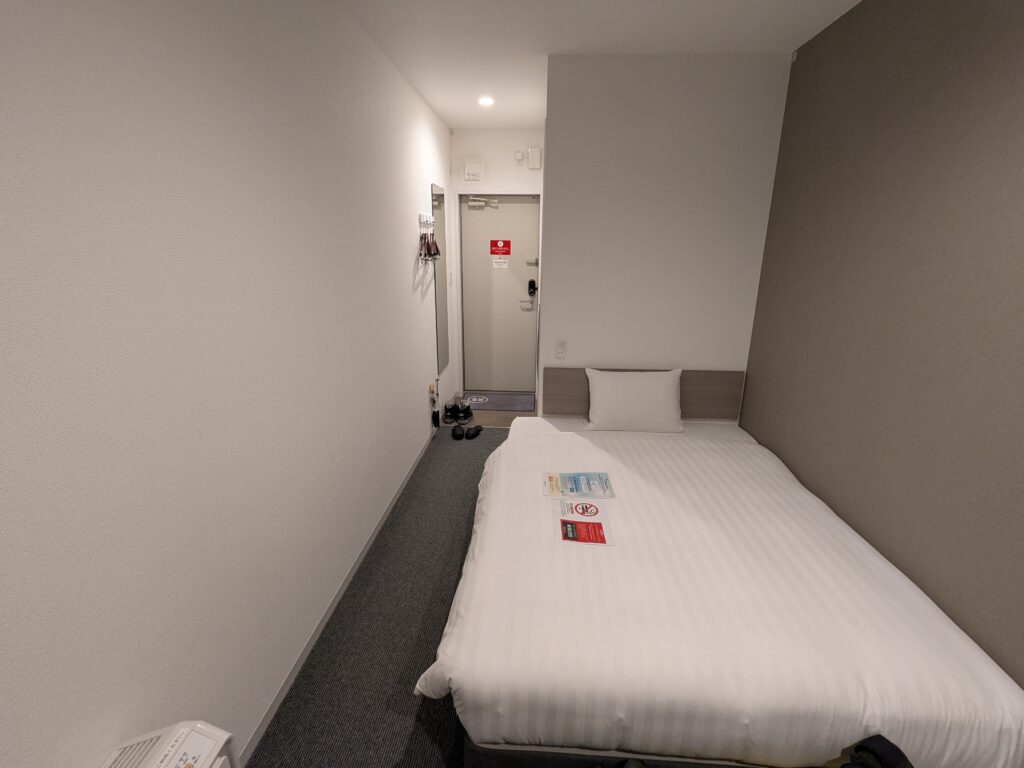
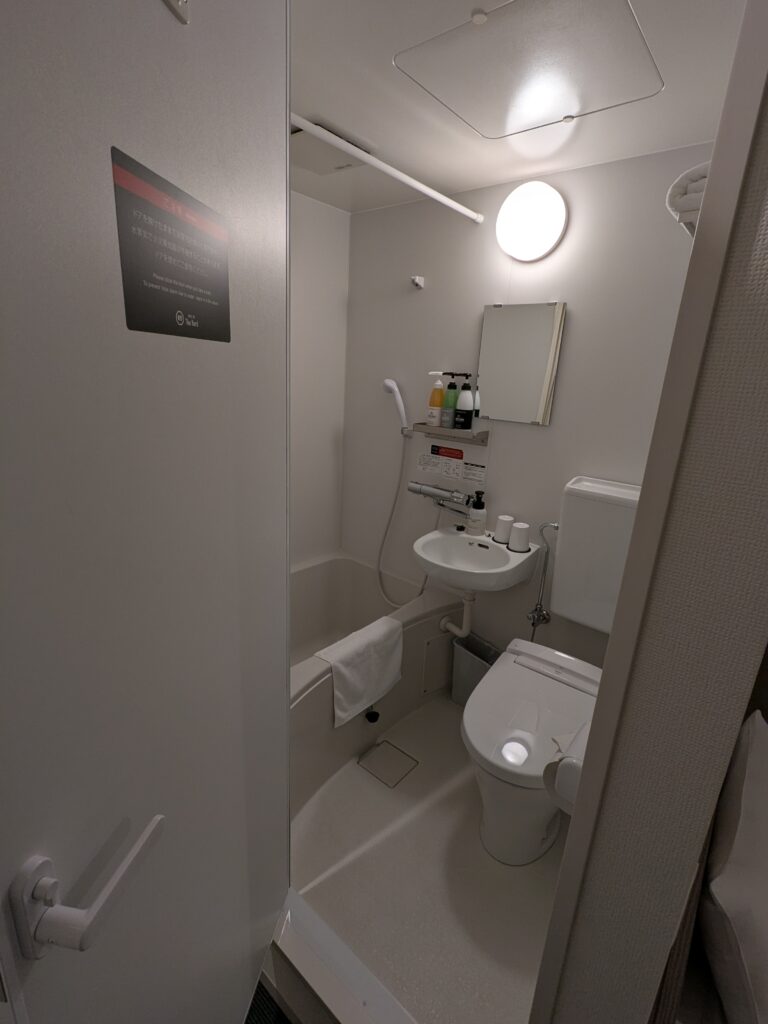
Today's accommodation is R9. They converted cargo containers into hotel rooms. I wanted to stay at one of them since I heard about similar container accommodations in Germany.
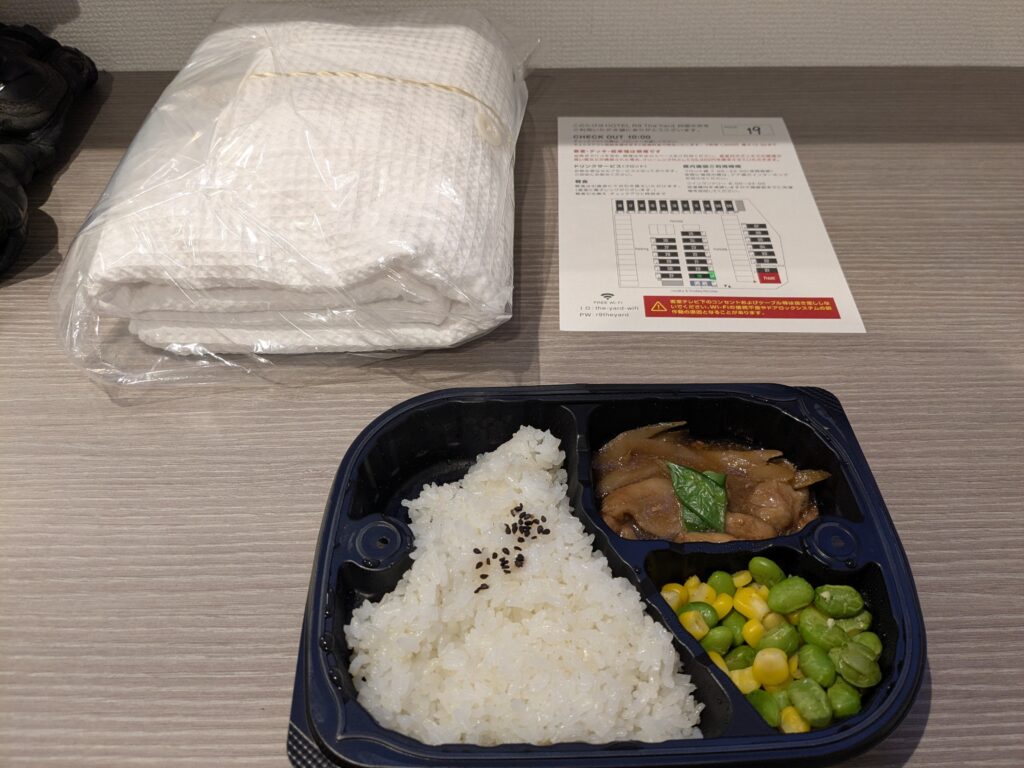
My unit was No. 19 at Shikoku-Chuo. It had everything I needed and even an evening meal was included. I heated it up in a microwave in my unit. It was good enough for me.
I hope this type of accommodation is widely available throughout Japan. Finding accommodation would be a lot easier with them.
Day 6: Shikoku-Chuou to Seiyo
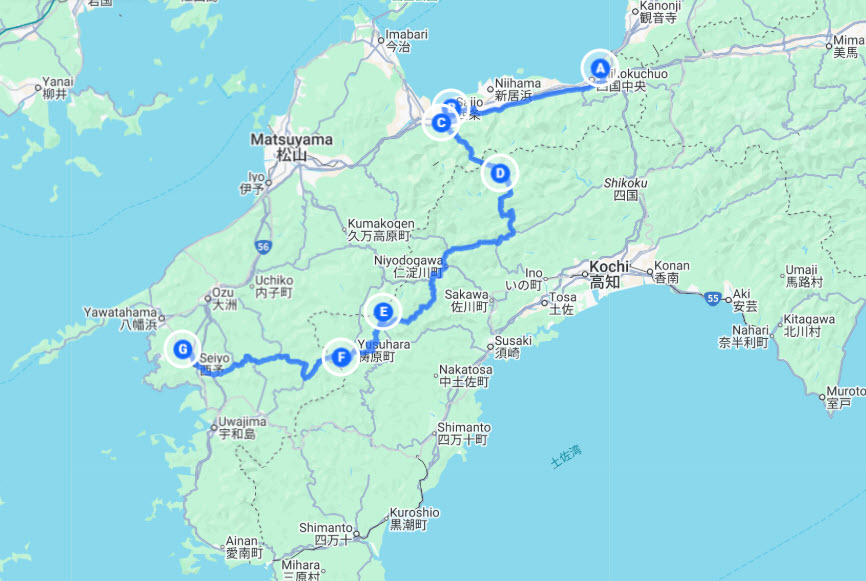
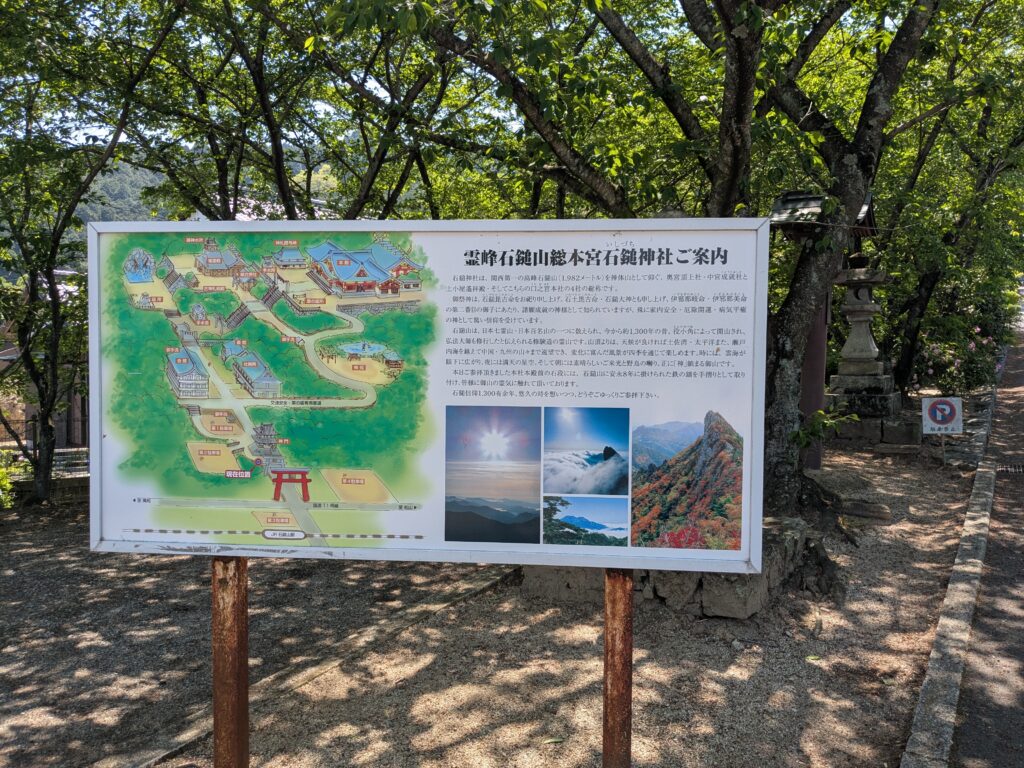
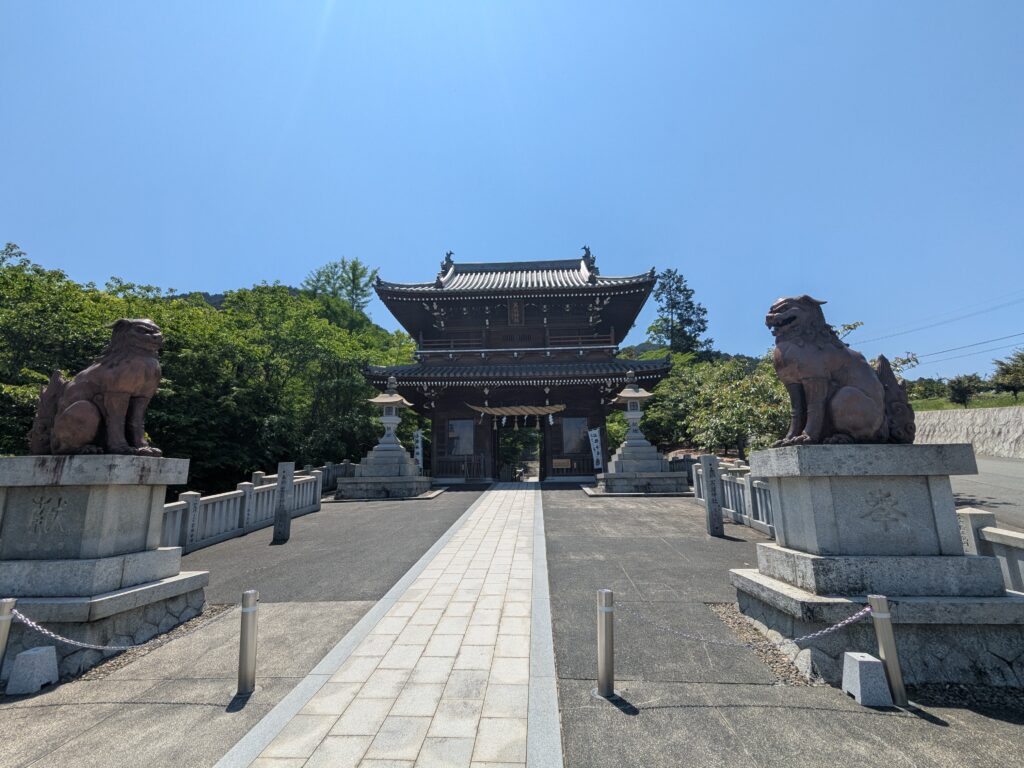
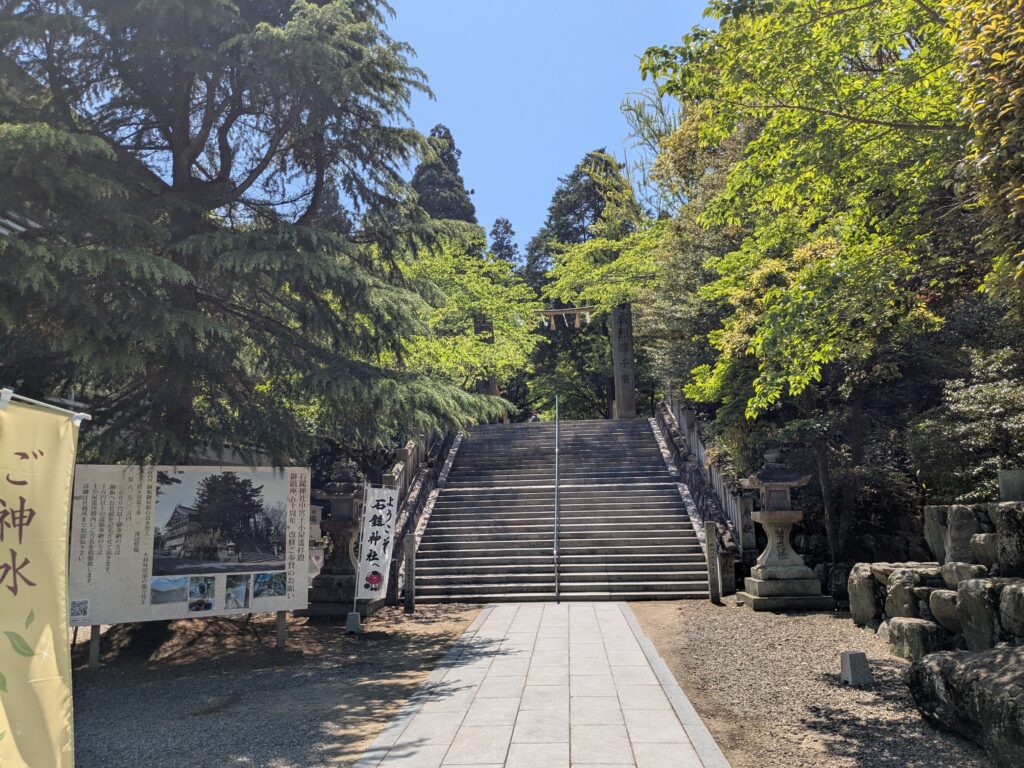
Today, I plan to visit Saijo, a place I've seriously considered moving to, and then explore Shikoku Karst before heading to the west side of Shikoku.
Saijo was just shy of a one-hour ride west. I visited places that I had watched many times on Street View in Google Maps.
Saijo is known for the beautiful natural water from the mountain. I stopped at one of the springs in the town and filled up my water bottle with the delicious water.
Then, I visited Ishiduchi Shrine HQ. There is a branch at the top of Mount Ishiduchi. I may try this when I travel, focusing on Shikoku in the future.
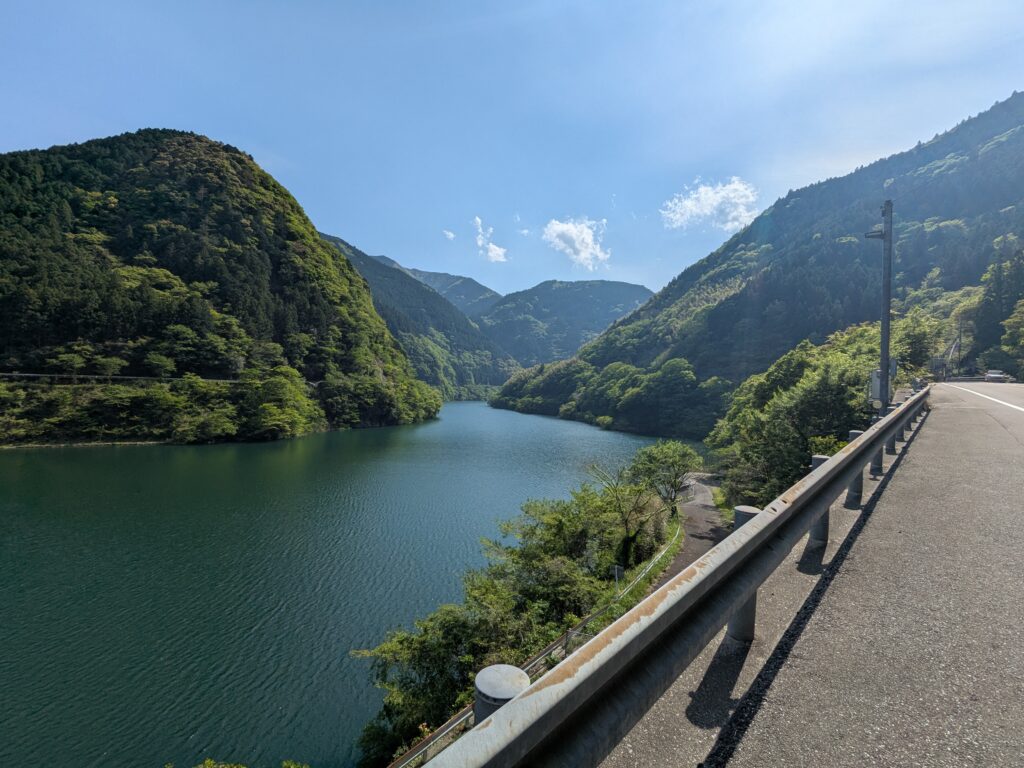
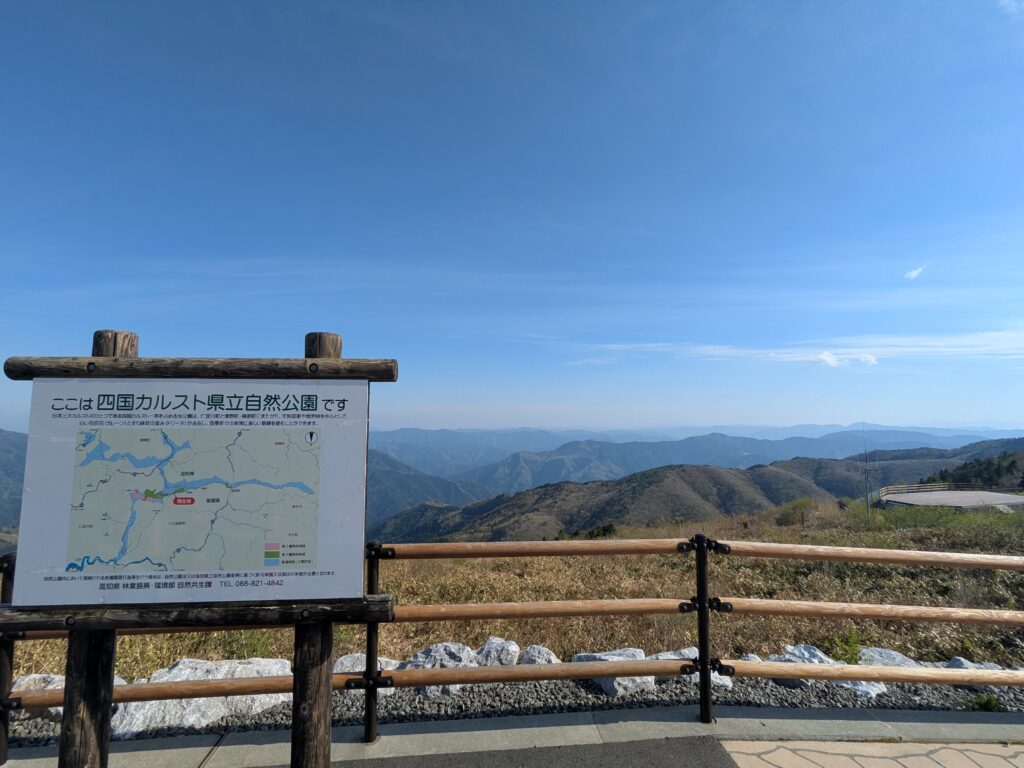
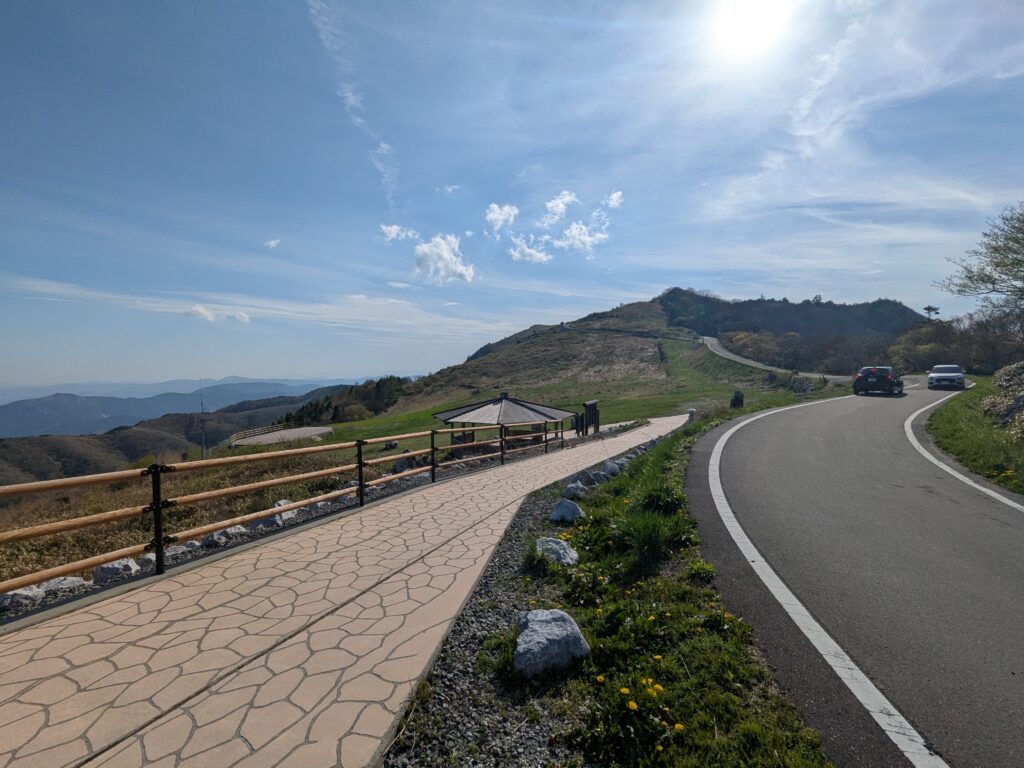
OK. Saijo visit is done. I am going to ride to the famous Shikoku Karst. Arguably, it is the best place for motorcyclists to visit in Shikoku.
It was quite far away. It was a series of mountain roads. It took two and a half hours to arrive at the entrance of Shikoku Karst. It was a bad idea to try going there on a Saturday. Many petrol stations were closed.
By the time I reached the entrance of Shikoku Karst, I felt very insecure about whether I could get to a petrol station with the remaining petrol.
With regret, I gave up riding through the Karst and set up a petrol station as my next destination. The worst scenario was that the petrol station was closed, despite Google Maps indicating it was open. If so, I had to call a rescue.
The petrol level was two out of six when I left Karst, but by the time I reached the petrol station, it had dropped to one level and was flashing. When I found that the petrol station was open, I thanked the owner three times in total.
With a full tank, I headed to today's accommodation.